Reviewed · POMPEII TOURS
Explore Pompeii with an Archaeologist
Pompeii is so large that a first visit can feel like a walk through a city without a map. This two-hour tour with an archaeologist gives you a route through major sights, from the Forum to private homes, while putting the ruins into everyday human context.
I like two things in particular: admission is included, so you avoid the usual ticket line, and the group is capped at 20, leaving more room to ask questions than you’d get in a crowd of tour buses. Guides such as Mario, Alexandra, Teresa, and Rosanna have led tours, though you won’t know your guide’s name in advance.
The trade-off is time. Pompeii is vast, and two hours is a brisk introduction, not a full visit. You’ll walk on uneven ground, and even with a skip-the-line ticket, popular rooms can have queues inside the site.
- A guided route through 12 major stops, including the Forum, House of the Faun, Stabian Baths, and Teatro Grande.
- Entry tickets are included, but the tour does not include transport, food, or drinks.
- Groups are limited to 20 people, with headsets provided when a group has 16 or more.
- English-language guiding connects monuments to the people who used them.
- The tour ends at Piazza Esedra, where you can continue exploring independently.
Start at Porta Marina Superiore
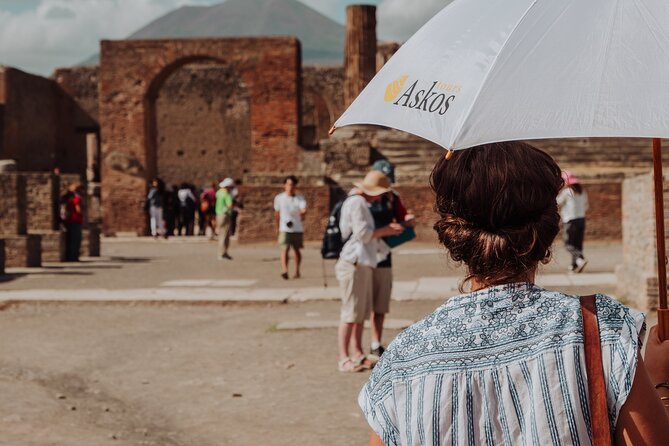
Meet at Pompeii’s Porta Marina Superiore entrance, at Via Villa dei Misteri, 2. Look for the Askos Tours sign. The tour begins with a short stop at the archaeological park entrance, where your guide helps you get oriented before heading into the ruins.
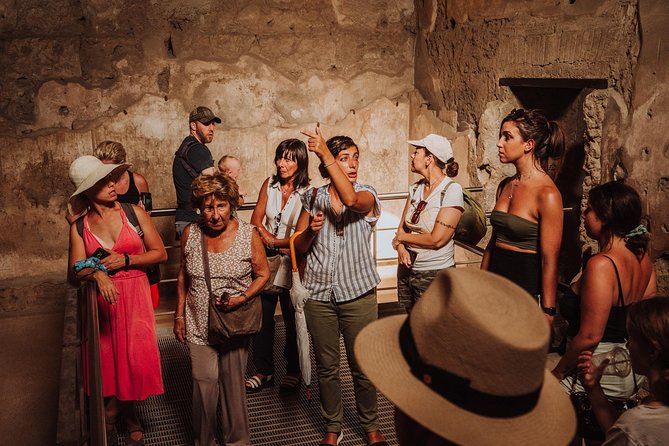
The site is enormous, and its streets, homes, shops, and public buildings can blur together if you set off without a plan. Having an archaeologist lead the way helps you make sense of what you’re seeing, rather than simply ticking off old walls. The guide’s explanations are the core of this tour: several guides, including Mario Celentano, Julia, Alexandra, Ilaria, Diego, Rosanna, and Teresa, have been praised for clear storytelling, patient answers, and keeping children engaged. Your own guide will vary.
The advertised group limit is 20 people. That is small enough to make questions more practical than they would be in a large crowd, though it is not a private tour. If the group has 16 people or more, headsets are provided. They can help you hear the guide, but crowded rooms and the general noise of a busy site may still make some explanations harder to catch.
The Forum, Basilica, and Granaries
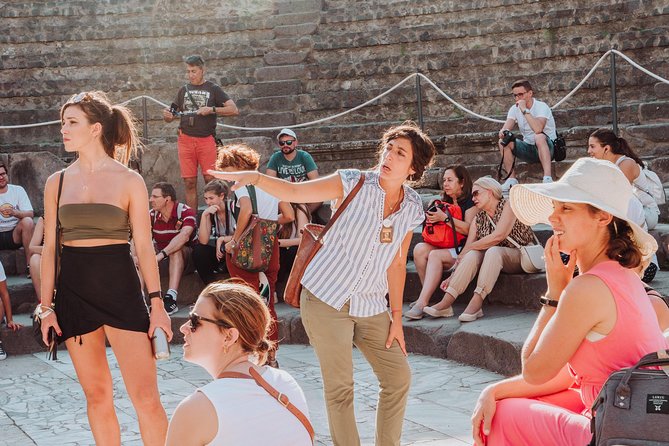
The Forum is the natural place to begin understanding Pompeii as a working city. This was its main square, a public space tied to civic, commercial, and religious life. Your guide spends about ten minutes here, highlighting what the surrounding buildings tell you about the city’s public face.
Nearby, the Basilica is introduced as the courthouse. It is a useful reminder that Pompeii was not just a collection of homes preserved by disaster, but a community with institutions, business, and civic routines. The stop is brief, so expect the guide to focus on the building’s role and the features that help you read it.
At the Forum’s granaries, you’ll see where food supplies were stored. The visit links the monumental center to the practical work of keeping a city fed. This is one reason guided commentary matters: the remains may not explain themselves at a glance, but a short account of their function can make the site more legible.
Each of these stops is scheduled for roughly ten minutes. That keeps the tour moving and gives you a broad overview, but it also means you won’t have much time to linger over details or explore each structure at your own pace.
More Pompeii visits near Pompeii:
- Pompeii: Entry Ticket and Guided Tour with an Archaeologist
★ 4.8 · 19,459 reviews - Pompeii: Entry Ticket with Optional Audio Guide
★ 4.2 · 12,360 reviews - Pompeii: Small Group Tour with an Archaeologist
★ 4.8 · 12,264 reviews
A brothel, a thermopolium, and a street of daily life
The Lupanar, Pompeii’s brothel, is among the stops that tend to draw attention. It offers a direct, sometimes startling glimpse of the city’s commercial life. Your guide can explain the building’s purpose and help place it in the context of Roman society, rather than treating it as a novelty stop.
The route also includes Thermopolium VI, one of the city’s food shops. Thermopolia served ready-to-eat food and drink, an everyday convenience that helps make ancient Pompeii feel less distant. A shop counter or serving area can tell you more about ordinary routines than another grand facade.
You’ll walk along Via dell’Abbondanza, one of Pompeii’s principal streets. Unlike the other listed stops, this street is marked as a pass-through rather than an included admission stop. It is still an important part of the route: streets connect the city’s public spaces to its homes and businesses, and you can see how the urban layout fits together as you walk.
The Lupanar and thermopolium are each allotted about ten minutes, while the street segment is also timed at about ten minutes. These are short visits, not long inspections. If a particular shop or building catches your eye, make a note of it and return after the tour.
The House of Menander and the House of the Faun
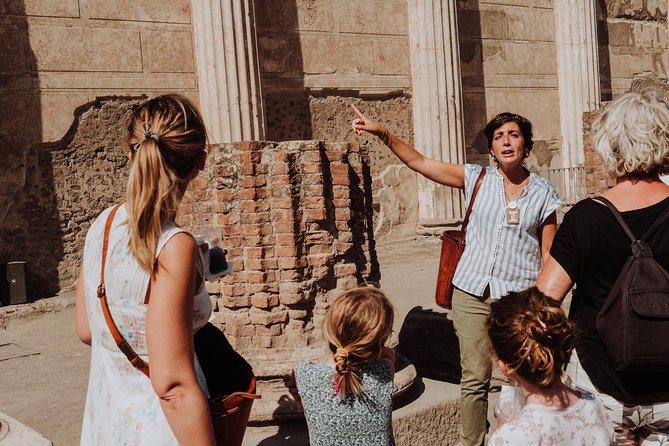
Pompeii’s private homes provide a different scale of history. The House of Menander is one of the residential stops, offering a chance to consider how wealthy households were organized and presented. A guide can point out features that are easy to pass by when you’re focused on taking in the overall size of a house.
The House of the Faun is another major residence on the route. Its name alone hints at the kinds of decorative details that distinguish one home from another. These houses help you see that Pompeii was not a uniform city: status, taste, and wealth shaped the spaces people lived in.
Both homes receive about ten minutes. That is enough for a guided introduction, but not a thorough look at every room or detail. Pompeii has far more houses than one short tour can cover, so think of these as selected examples rather than a complete survey of domestic life.
Stabian Baths and the city’s shared spaces
The Stabian Baths introduce the social side of Roman city life. Baths were more than places to wash; they were shared facilities and part of a regular routine. Your guide can explain the building’s function and help you follow how its spaces were used.
The scheduled stop is about ten minutes, which means you should expect a focused visit rather than time to study every room. As with the other interiors, access and crowding can affect how long you spend in a particular area. Skip-the-line admission helps with entry to the archaeological park, but it does not guarantee an empty site or instant access to every room.
This is a good point in the route to notice the contrast between public facilities and the grand private houses. Pompeii’s remains make more sense when you see the city as a whole, with shared services, shops, civic buildings, and homes woven together.
A different kind of Campania day:
- From Naples: Pompeii Ruins & Mount Vesuvius Day Tour
★ 4.3 · 11,459 reviews - Pompeii Small Group Tour with an Archaeologist
★ 5.0 · 6,593 reviews - Naples or Sorrento: Full-Day Pompeii and Mount Vesuvius Tour
★ 4.6 · 4,235 reviews - Pompeii & Mt.Vesuvius Day Tour from Naples with Pizza Lunch
★ 4.0 · 2,901 reviews
Casa dei Vettii and Teatro Grande
Casa dei Vettii is another substantial home, and one of the final listed stops. Like the House of Menander and the House of the Faun, it gives you a look at domestic space and wealth. The guide’s role is to draw out what makes each house distinct, rather than letting every residence become one more courtyard on a long walk.
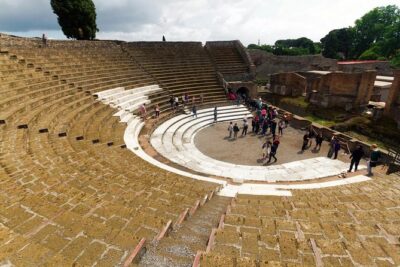
The Teatro Grande provides a change of scene. This was the city’s theater, a public venue for performances and gatherings. Its scale makes it a memorable contrast to the intimate rooms of the houses and shops you’ve visited along the way.
The route gives each stop about ten minutes. Guides have been praised for adjusting their pace and checking whether the group is keeping up, but the tour still has a fixed two-hour shape. If you want to sit with the details or see more of the theater area, plan to stay after the guided portion ends.
What two hours can, and cannot, show you
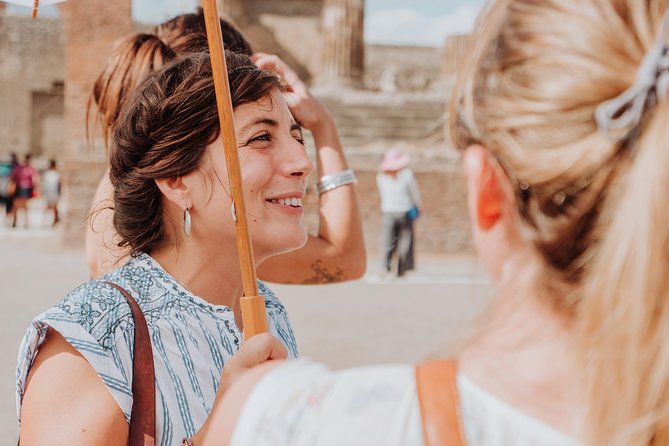
This tour is designed to cover a generous range of Pompeii’s highlights in a short time. In about two hours, you’ll see the main square, courthouse, brothel, granaries, three grand homes, baths, a street, a food shop, and a theater. That is a useful first map of the site, especially if you are unsure where to begin.
But Pompeii is a city, not a single monument. Two hours cannot cover it all, and the tour does not promise visits to active excavation areas. One visitor’s account also described internal queues and crowds that made some rooms difficult to access or hear about. That is a fair caution, particularly in busy periods.
I’d treat the guided walk as an orientation, then set aside extra time to explore independently. One guide specifically suggests that you can stay on site after the tour, and the endpoint at Piazza Esedra leaves you there to continue. If you have only two hours total, you’ll get a solid overview. If Pompeii is a main reason for your visit, make room for a longer stay.
Price, pace, and practical details
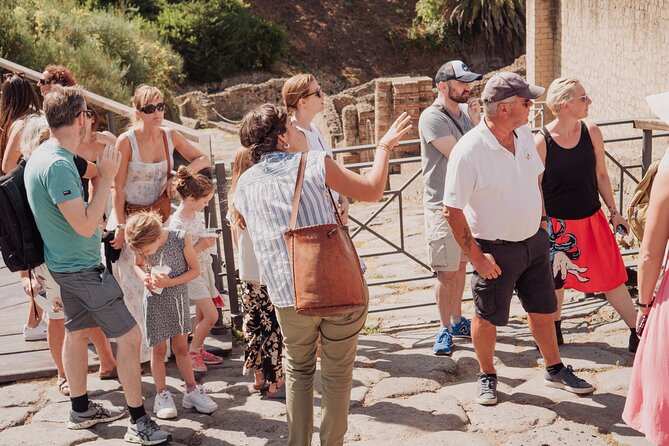
At $35.67 per person, the price includes the Pompeii admission fee and an expert archaeologist as your guide. That makes the cost easier to judge than a tour price that leaves entry tickets to buy separately. You are also paying for interpretation and a planned route through a large site, not just for someone to lead you from one building to the next.
The tour is usually booked around 30 days in advance on average, but that is a general pattern, not a guarantee that you must book exactly a month ahead. It is offered in English, lasts about two hours, and does not include transportation, food, or drinks. Pompeii is easy to reach by train according to one tour participant, but transport is not part of this booking.
Wear shoes that can handle uneven surfaces. The amount of walking is substantial, and the route crosses ancient streets and rough ground. In summer, bring a hat or umbrella, a refillable water bottle, and a fan if you have one. Water is available from fountains, according to a visitor tip, but food and drinks are not supplied by the tour.
The meeting point is Via Villa dei Misteri, 2, at Porta Marina Superiore; the tour finishes at Piazza Esedra. The booking confirmation arrives at the time of booking. Travelers under 18 are advised to bring a passport or ID to qualify for free admission. Service animals are allowed; other dogs must weigh no more than 10 kg and stand no taller than 40 cm. They must stay on a leash, be carried inside buildings, and their waste must be collected.
You can cancel for a full refund up to 24 hours before the start time. Cancellations or changes made less than 24 hours before the tour are not accepted for a refund or adjustment. The cut-off follows local time.
Who should book this Pompeii tour?
I’d choose this tour if you want a guided first look at Pompeii, value archaeological context, and have about two hours for a structured visit. It can work well for families: guides have made the history clear and engaging for children, and a small group makes questions easier. It also suits visitors who want the major landmarks explained before they explore on their own.
I’d think twice if you want a private, highly flexible visit, prefer to move slowly, or expect to see every part of the site. A 20-person maximum is still a group, and the busy interiors can limit how well you hear or how long you can stay. If your priority is detail and quiet, a private tour may suit you better, though it will not be the same price.
For most first visits, the value is strong: entry is covered, the route hits a good range of sights, and an archaeologist can turn scattered ruins into a coherent picture of city life. Book it as a well-guided introduction, not as your entire Pompeii day. If you can stay afterward, you’ll get both a clear overview and time to follow your own curiosity.
FAQ
How long is the tour?
It lasts about two hours.
What language is the tour offered in?
The tour is offered in English.
Is Pompeii admission included?
Yes. The Pompeii admission fee is included in the tour price.
How many people can be in the group?
The group is limited to a maximum of 20 people per guide.
Are headsets provided?
Headsets are provided for groups of 16 or more.
Where does the tour start?
It starts at Porta Marina Superiore, at Via Villa dei Misteri, 2, 80045 Pompei.
Where does the tour end?
It ends at Piazza Esedra, 80045 Pompei.
Is transportation included?
No. Transportation is not included.
Do children under 18 need identification?
Travelers under 18 are advised to bring a passport or ID to qualify for free admission.
What is the cancellation policy?
You can cancel up to 24 hours before the start time for a full refund. Changes or cancellations made less than 24 hours before the tour are not accepted.
Recently added near Pompeii
- Capri Tour from Pompeii, Vico Equense & Castellammare di Stabia★ 4.5 · 57 reviews
- Capri, Sorrento and Pompeii Private Tour★ 5.0 · 3 reviews
- Capri, Blue Grotto, Sorrento & Pompeii Private Tour★ 5.0 · 12 reviews
- Day Trip to Capri, Blue Grotto, Sorrento & Pompeii Entry Tickets★ 5.0 · 12 reviews
- Day Trip to Capri, Sorrento and Pompeii from Rome★ 5.0 · 6 reviews
- 3-Days Audio Guide for Pompeii, Herculaneum, Vesuvius and Naples★ 5.0 · 7 reviews
- Minivan Tour | Amalfi Ravello and Pompeii with driver★ 4.5 · 11 reviews
- Amalfi, Ravello & Pompeii: private tour with no-traffic (8-hour)★ 5.0 · 4 reviews
Pompeii Tours, compared.
Pompeii: Entry Ticket and Guided Tour with an Archaeologist
Read our review →
Pompeii: Entry Ticket with Optional Audio Guide
Read our review →
Pompeii: Small Group Tour with an Archaeologist
Read our review →
Naples or Sorrento: Full-Day Pompeii and Mount Vesuvius Tour
Read our review →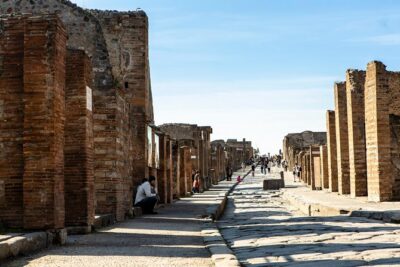
Pompeii & Mt.Vesuvius Day Tour from Naples with Pizza Lunch
Read our review →