
Reviewed · NAPLES MUSEUM TOURS
Naples: LAPIS Museum Guided Visit in Italian
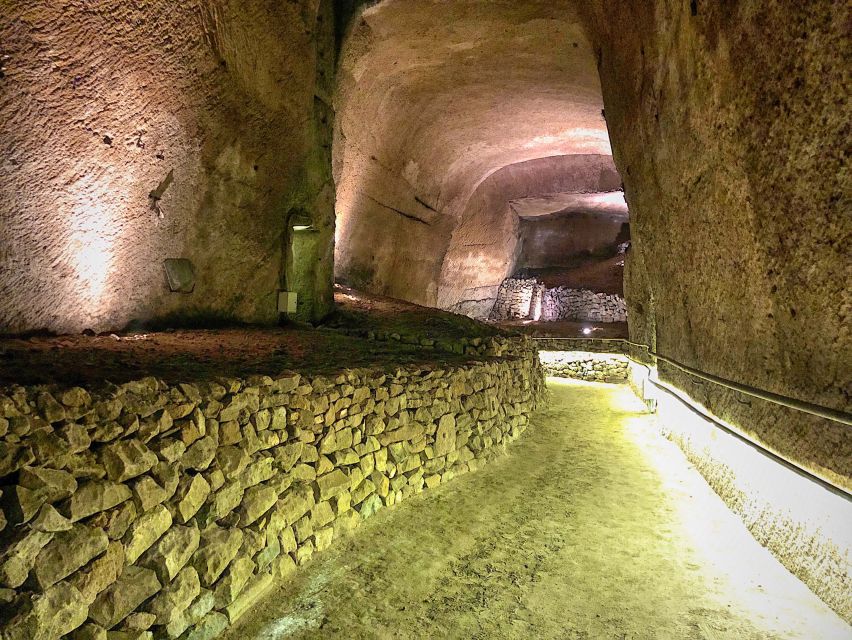
Beneath the Basilica of Pietrasanta, ancient cisterns and water channels offer a different way to see Naples: from 35 meters below its historic center. I like two details in particular: the quick ride down in an archaeological lift and the colored lighting that brings out the shape of the old vaulted spaces.
One thing to weigh is that the tour is in Italian only, so it may not be the right choice if you need an English explanation. It also isn’t suitable for wheelchair users or people with mobility impairments.
- The descent is part of the visit: The archaeological lift takes about 20 seconds to reach 35 meters below ground.
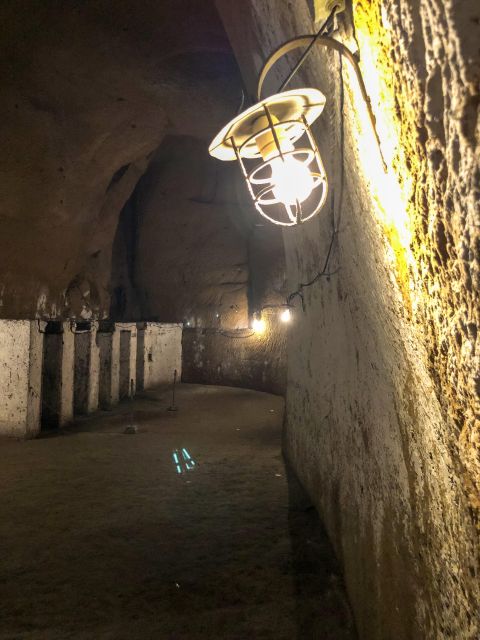
- You visit Greco-Roman cisterns: The underground route runs through old water infrastructure beneath the Basilica of Pietrasanta.
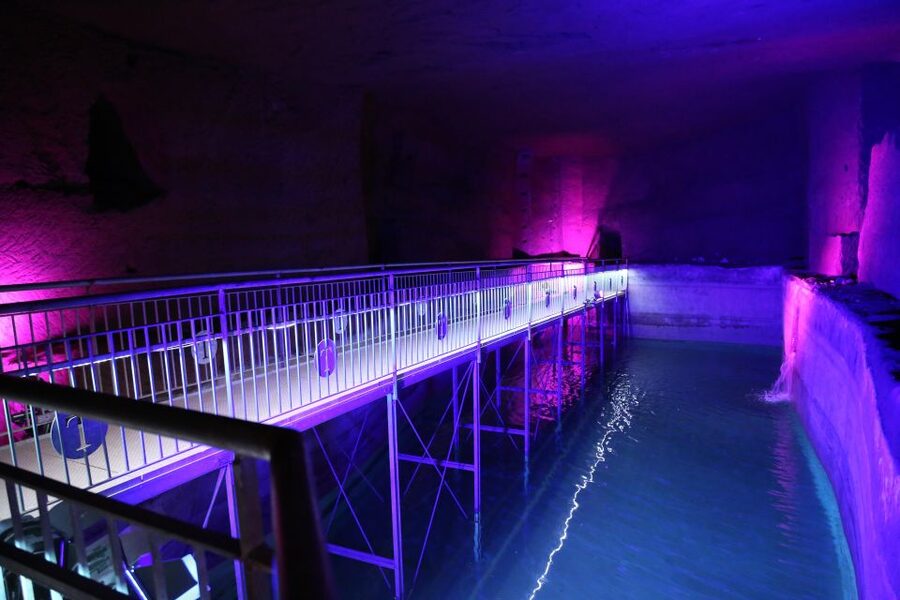
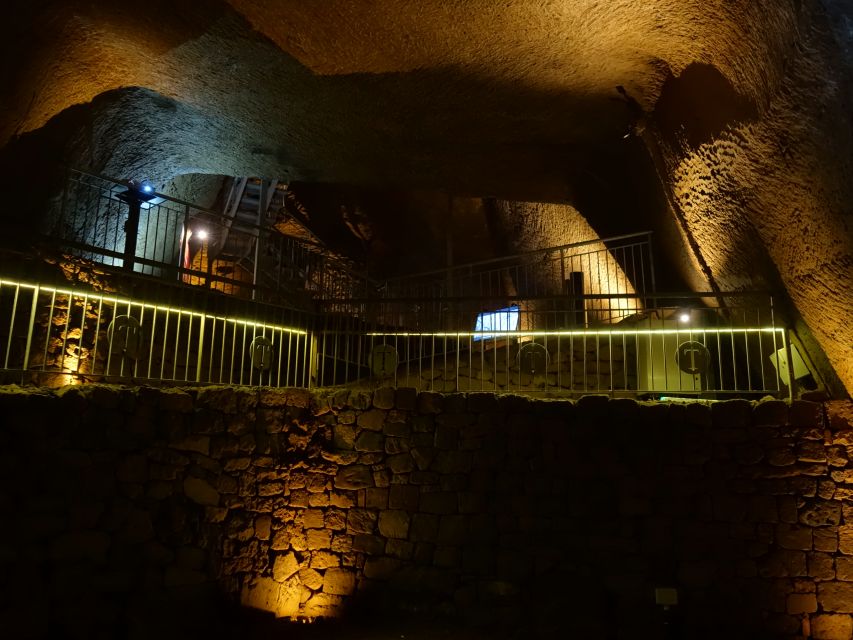
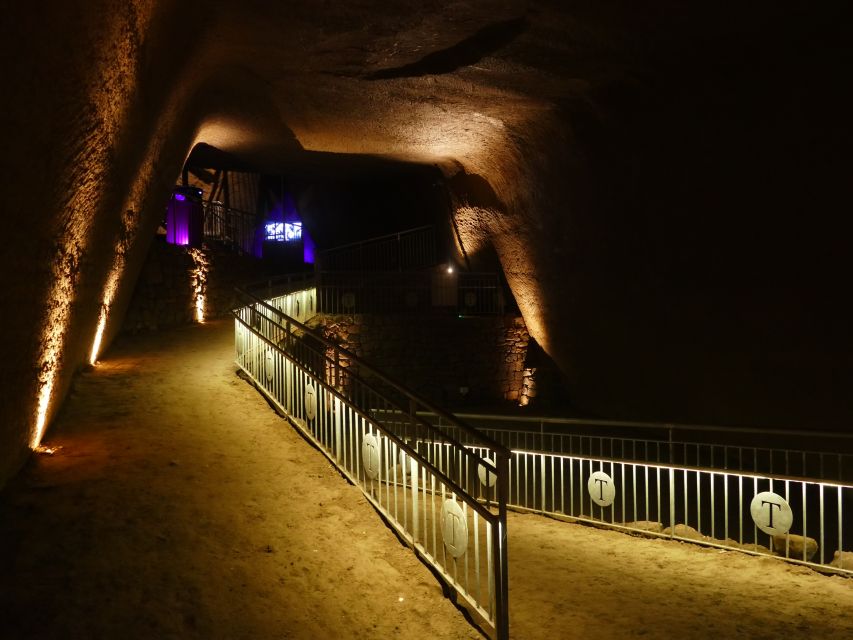
- Lighting brings out the architecture: A technical lighting system highlights the cisterns’ volumes and vaults with color.
- The group is small: Visits are limited to 10 participants, with an Italian-speaking guide.
- The setting spans different eras: The Basilica was built in the mid-17th century by architect Cosimo Fanzago, on the remains of an ancient temple to Diana.
Naples begins below the Basilica of Pietrasanta
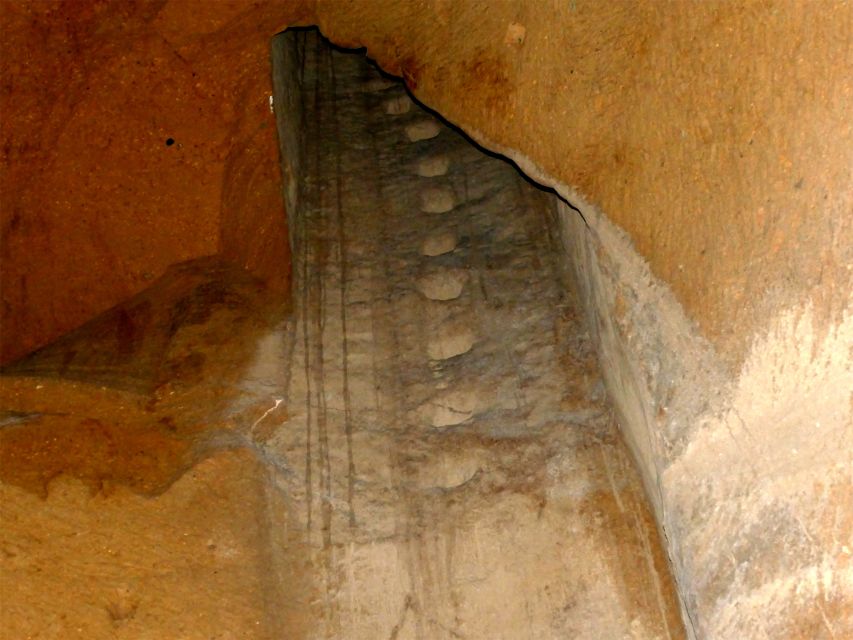
The LAPIS Museum’s Water Museum takes you beneath a church in the historic center and into the underground spaces that once helped supply Naples with water. This isn’t simply a display about old plumbing. The route passes through Greco-Roman cisterns, part of a hydraulic system that has been brought back into operation.
That blend of practical engineering and ancient architecture gives the visit its character. You are looking at spaces built to hold and manage water, not rooms designed as museum galleries. Their scale, arches and vaults make the engineering legible even if you don’t know much about Roman water systems.
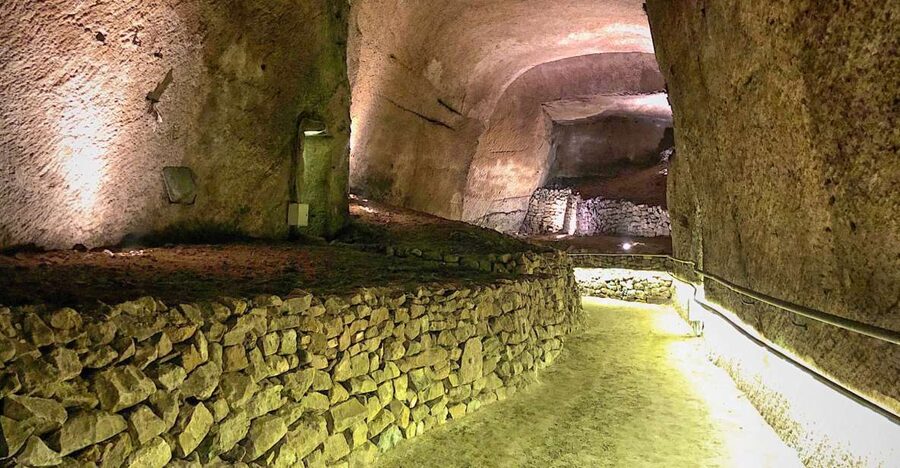
The underground route is called the Submerged Decumanus. The name hints at how Naples’ past layers beneath its present-day streets, though the experience here is focused on the basilica’s underground spaces and waterworks. A guide helps connect the site’s different periods, from the ancient cisterns to the church above.
A 20-second lift ride to 35 meters down
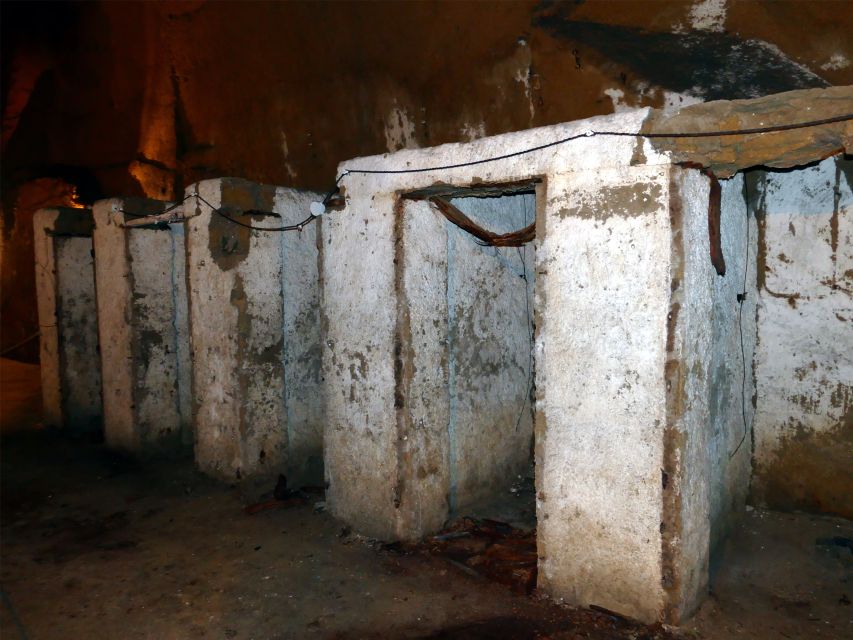
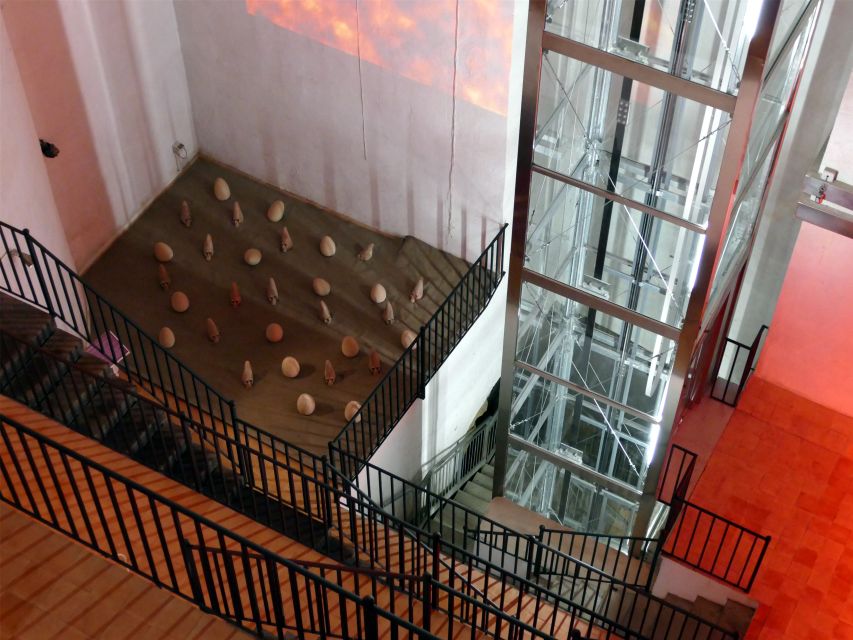
The most striking practical detail comes early: an archaeological lift connects the crypt with the underground route. It descends 35 meters in about 20 seconds, carrying you from the basilica’s level into a very different setting.
The lift is more than a convenience. In a short visit, it makes the change in scale and place feel immediate. One moment you are in a church complex in Naples’ historic center; shortly after, you are far below it, among cisterns built for a city’s water supply.
The lift is described as the first archaeological lift in Naples’ historic center. That makes access to the underground spaces a notable part of the project itself. Still, do keep the accessibility limits in mind: the experience is not suitable for people with mobility impairments or wheelchair users.
More museum tours near Naples:
- Naples: National Archaeological Museum Ticket & Audio App
★ 4.4 · 617 reviews - Naples: National Archaeological Museum of Naples Guided Tour
★ 4.8 · 498 reviews - Naples: National Archaeological Museum Tour & Digital Guide
★ 4.2 · 177 reviews
Greco-Roman cisterns, still tied to water
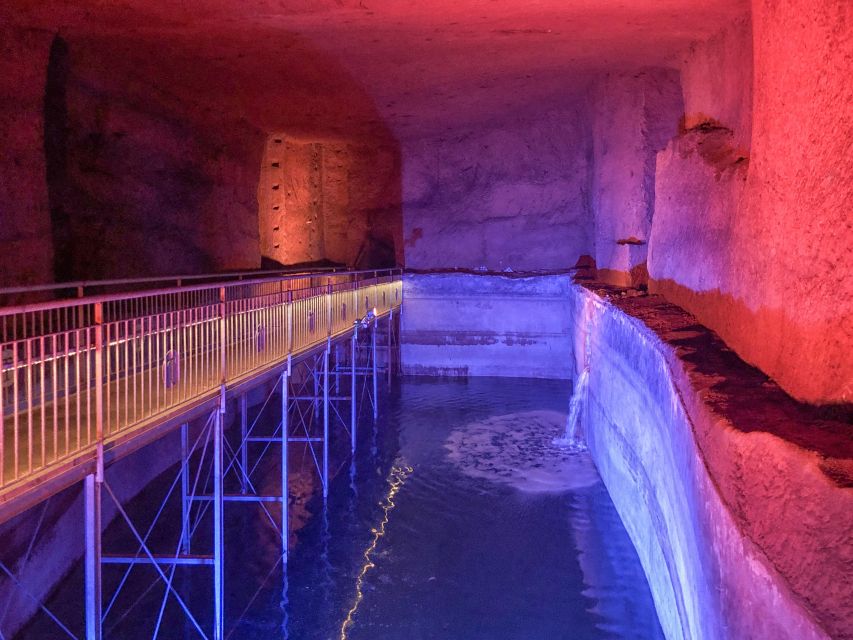
The cisterns are the heart of the visit. They are part of an ancient hydraulic system, and the route presents them as working water spaces rather than as sealed-off ruins. The cisterns now contain water and runoff, giving the underground rooms a direct link to the function they were built to serve.
That is what makes the visit different from a walk through a typical archaeological site. You see not only old masonry but also the purpose behind it: collecting and managing water. If you like places where engineering and history meet, this short tour offers a clear example without requiring a full day or a long museum visit.
The visit also makes a useful companion to a walk through central Naples. Above ground, the basilica belongs to the city’s busy, layered streets. Below, the cisterns show another layer of the same place, built for a basic need that shaped urban life.
Lighting that reveals the shape of the underground rooms
The cisterns have been enhanced with a technical lighting system. Colored lights emphasize the spaces’ volumes and vaults, helping you see the architecture in a way that might be harder in a dim underground setting.
The lighting is part of the presentation, not a substitute for the site’s original purpose. These were water structures, and their arches and large enclosed spaces were built to serve that function. The illumination makes their shape easier to take in, while the water and runoff keep the link to their past use visible.
If you prefer archaeological sites left in near-darkness, the lighting may feel more theatrical than you want. But in a short guided visit, it has a practical role too: it helps you read the space and notice its scale. The effect is especially useful in a place where the architecture is the main attraction.
A church built over an ancient temple
The underground route sits beneath the Basilica of Pietrasanta, a complex with its own long timeline. Architect Cosimo Fanzago built the basilica in the mid-17th century on the remains of an ancient temple dedicated to the goddess Diana.
That layering gives the visit more context than a standalone set of cisterns. You are entering a site where one era has been built over another, and the underground route connects the modern museum experience with both the ancient water system and the later church complex.
The basilica is now home to the LAPIS Museum. The Water Museum serves as the hub of its underground path, so this is a focused way to explore the lower levels rather than a general tour of every part of the church or museum. If you want a broad survey of Naples’ churches, this is not that. If you want one distinctive site with a clear theme, it fits well.
More Naples days worth booking
- Naples: Naples Underground Entry Ticket and Guided Tour
★ 4.4 · 21,781 reviews - From Naples: Pompeii Ruins & Mount Vesuvius Day Tour
★ 4.3 · 11,459 reviews - From Naples: Sorrento, Positano and Amalfi Full-Day Tour
★ 4.6 · 10,988 reviews - From Naples: Sorrento, Positano & Amalfi Coast – Small Group Tour
★ 5.0 · 8,643 reviews
What a 75-minute guided visit gives you
At 75 minutes, the tour is short enough to slot into a day of sightseeing, but long enough to give the underground spaces some context. Admission and an Italian-speaking guide are included. The group is limited to 10 people, which can make it easier to follow the explanation and see the rooms without being part of a large tour.
The guide matters here. Cisterns can be impressive to look at, but without explanation their details may not mean much. A prepared guide can help you understand how the spaces relate to water management and the history of the basilica above. The experience has drawn praise for being well organized and for offering a fresh perspective on Naples, with particular appreciation for the guide’s preparation.
Language is the key condition. The tour is conducted in Italian, and the available information names no guide in advance. If you understand Italian, you can follow the interpretation directly. If you don’t, you may still appreciate the architecture and lighting, but you’ll miss much of the guided context.
Is $15 good value?
At $15 per person, the visit is a reasonably priced way to see a part of Naples that is hard to experience from street level. The fee includes admission and the guide, and the 75-minute length keeps the commitment modest. The lift, the underground cisterns and the lighting all contribute to a specific experience, rather than a general city tour.
The value depends on what you want from your time. If you are curious about the city’s water systems, underground architecture or layered past, the price is easy to justify. You get a focused visit to an unusual setting, with a guide to explain what you are seeing.
If you are short on time and already plan to visit several churches or archaeological sites, consider whether another underground stop adds enough to your day. This tour is not a substitute for a wider survey of Naples. Its appeal is precisely its narrow focus: one basilica, one underground route and the water system below.
Planning for the visit
Check the available start times before choosing a slot. The experience lasts 75 minutes, and bookings must be made no later than 24 hours before the desired visit. The small-group limit is 10, so it is sensible to plan ahead if you have a particular time in mind.
The tour is offered in Italian. Keep that in view when deciding if the guide’s commentary will be useful to you. It may still suit you if you mainly want to see the cisterns and the underground setting, but the explanation is a meaningful part of the visit.
The experience is not suitable for wheelchair users or people with mobility impairments. If that applies to you, don’t assume the lift makes the full route accessible; the tour’s stated suitability excludes both groups. The booking also allows cancellation up to 24 hours in advance for a full refund, and you can reserve now and pay later.
Should you book the LAPIS Museum visit?
Book this tour if you want a concise, guided look at Naples from below, and especially if ancient water systems interest you. The 35-meter lift descent, the Greco-Roman cisterns and the lighting give the visit a clear identity, while the small group and 75-minute duration make it an easy addition to a day in the historic center.
Skip it if you need an English-language guide, have mobility limitations, or prefer to spend your time on broad surveys rather than a focused underground site. For the right visitor, $15 buys a distinctive view of Naples that is both architectural and practical: a glimpse of how the city’s past handled a basic need.
FAQ
How long does the LAPIS Museum visit last?
The guided visit lasts 75 minutes.
What language is the tour in?
The live guide speaks Italian. No other tour language is specified.
How far underground does the lift go?
The archaeological lift descends to a depth of 35 meters. The ride takes about 20 seconds.
What is included in the price?
The $15 price per person includes admission and an Italian-speaking tour guide.
Is the visit suitable for wheelchair users?
No. The experience is not suitable for wheelchair users or people with mobility impairments.
How large is the tour group?
The visit is limited to 10 participants.
Recently added near Naples
- Tiramisù Making Class With Limoncello or Meloncello Tasting★ 5.0 · 17 reviews
- Private Natural Wine Vs Byodinamic and Organic Wine Tour★ 5.0 · 6 reviews
- Caserta Royal Palace tour★ 5.0 · 4 reviews
- Tour in the Charterhouse of St. Martin and Pedamentina with an art expert★ 4.5 · 3 reviews
- Private City Kickstart Tour: Naples★ 5.0 · 7 reviews
- Caserta Royal Palace Private Walking Tour★ 4.5 · 12 reviews
- Caserta Royal Palace small group tour★ 5.0 · 6 reviews
- Caserta Royal Palace Entrance Ticket★ 3.5 · 78 reviews
Naples Museum Tours, compared.
National Archaeological Museum Ticket & Audio App
Read our review →
National Archaeological Museum of Naples Guided Tour
Read our review →
National Archaeological Museum Tour & Digital Guide
Read our review →

Sant’Aspreno ai Crociferi: Church & Jago Museum Guided Tour
Read our review →
Pompeii: Skip-the-Line Ticket and Virtual Museum
Read our review →
San Gennaro Experience With Filangieri Museum Option
Read our review →Browse the lists this tour appears in