Reviewed · POMPEII TOURS
Pompeii: 2-Hour Guided Tour with an Archaeologist
Pompeii is not just a field of old stones. Its streets, shops, homes, and public buildings make a Roman town feel startlingly close, while the plaster casts of people and animals bring the eruption of 79 AD into painful focus. With an archaeologist guiding you, you get more than a route through the ruins: you get help understanding what you are looking at.
I like two things in particular: the private format, which lets your group ask questions and set a manageable pace, and the range of stops, from the Forum and baths to a bakery and the Lupanar. Guides such as Rosalina, Paola, Giancarlo, and Sergio have been praised for bringing history to life with clear explanations and engaging stories.
The main consideration is time. Two hours is enough for a strong introduction, not a full visit to this large archaeological site. At $175.74 per person, the tour is a substantial expense, so it makes most sense if expert context and an organized overview matter more to you than exploring at your own pace.
- See central Pompeii in a short visit: The route covers major public spaces, homes, shops, baths, and theatres.
- Hear the story behind the ruins: An archaeologist guide explains the eruption, the city’s burial, and its rediscovery in the 18th century.
- Visit headline sights: Expect the Forum, Basilica, Temple of Apollo, Forum Baths, Lupanar, and notable houses.
- Look closely at everyday life: A bakery’s preserved utensils and food help make the past concrete.
- Walk with a private guide: Your group can ask questions and, as one party reported, move at a slower pace when needed.
- Plan for sun and stone streets: Wear comfortable shoes and bring water, sunglasses, and a hat.
Why an Archaeologist Changes the Visit
Pompeii’s scale is part of its wonder and part of its challenge. Without context, you can walk past a house, bath, or public building and see only walls and doorways. A guide helps you connect those remains to the city’s public life and private routines.
This tour focuses on the western part of the site, where many important public buildings, homes, and shops are located. The guide’s job is not simply to point out landmarks, but to explain how Pompeii worked as a Roman town and what the eruption preserved.
The guide is described as an archaeologist, and the tour’s focus includes both Pompeii’s history and the later work of excavation. Tonia, for example, has been praised for explaining how archaeological understanding has changed since the sites were discovered. That perspective matters: Pompeii is not a frozen picture that explains itself. What you see is shaped by centuries of discovery and interpretation.
The experience has a strong record of engaging guides. Names that have been mentioned include Rosalina, Tonia, Enzo, Paola, Alessandro, Giancarlo, Sergio, Ana, Felicia, and Chiara. You cannot count on receiving a particular guide, but the comments about them repeatedly point to lively storytelling, clear explanations, and a willingness to answer questions.
Starting at Porta Marina
The tour meets by Porta Marina Superiore, though the exact meeting point may vary with the option you book. One visitor had trouble finding the meeting location on a GPS system, so check the written directions and meeting instructions carefully rather than relying on a map pin alone.
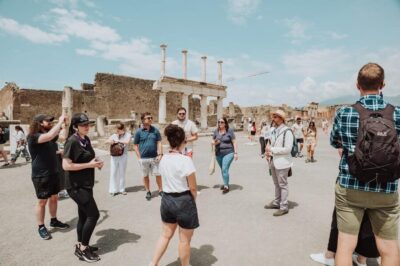
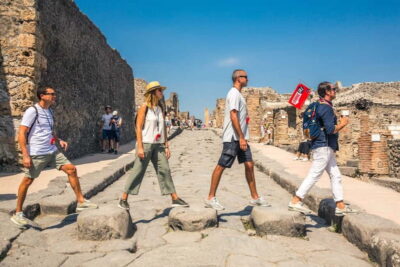
Porta Marina is a useful starting point for a tour of the western part of Pompeii. From here, you enter a city whose streets still make its old layout legible. You walk where residents once moved between homes, shops, and civic spaces, while your guide gives you a framework for reading the remains.
The entrance ticket is included, along with disposable earphones for larger groups. Since this is a private tour, the format is designed for your own party rather than a large public group. One group of 19 described having a private tour, but no maximum group size is specified, so ask before booking if your party is large.
More Pompeii visits near Pompei Campania:
- Pompeii: Entry Ticket and Guided Tour with an Archaeologist
★ 4.8 · 19,459 reviews - Pompeii: Small Group Tour with an Archaeologist
★ 4.8 · 12,264 reviews - Pompeii: Skip-the-Line Entrance Ticket with Audio Guide
★ 4.0 · 2,509 reviews
The Forum, Temple of Apollo, and Basilica
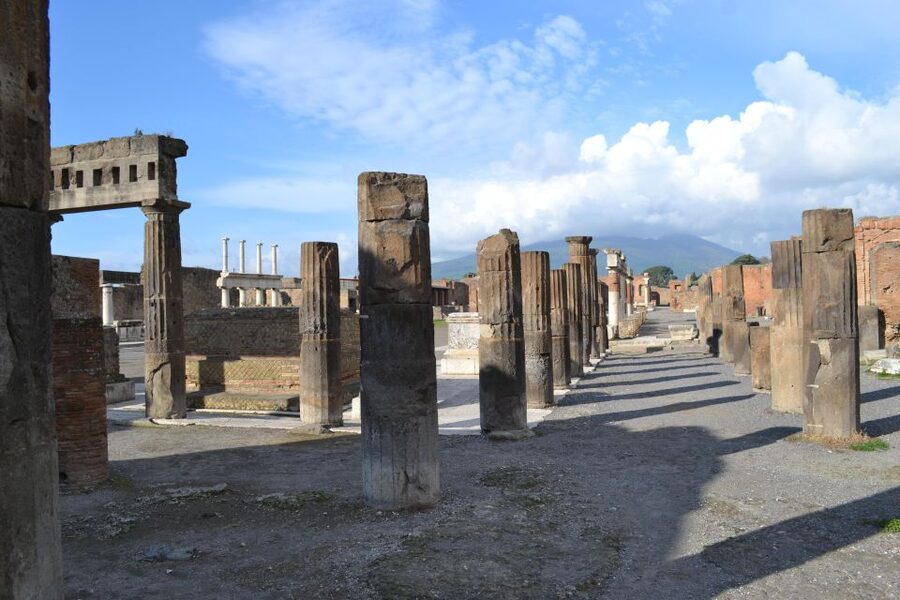
The Forum is the natural heart of this walk. It was the center of political and social life, and it gives you a sense of how public affairs were woven into daily routines. Your guide can help you distinguish the civic center from the surrounding remains and explain why this open space mattered to the people who lived here.
Nearby, the Temple of Apollo adds a religious dimension to the route. It is one of the named stops, but the exact time spent at each location is not specified. In a two-hour tour, think of these places as connected chapters in a compact introduction, rather than expecting a long, quiet visit at every building.
The Basilica, identified as a courthouse, offers another look at public life. Together, these stops help show that Pompeii was not simply a residential town. It had civic institutions and shared spaces where people conducted business, worshipped, and gathered.
Pompeii and Herculaneum are recognized by UNESCO for the unusually complete picture they offer of society and daily life at a particular moment in the past. That idea becomes easier to grasp as your guide moves between public buildings and private homes. The value is in seeing the pieces in relation to one another, rather than treating each ruin as an isolated photo stop.
Homes, Shops, and the Lupanar
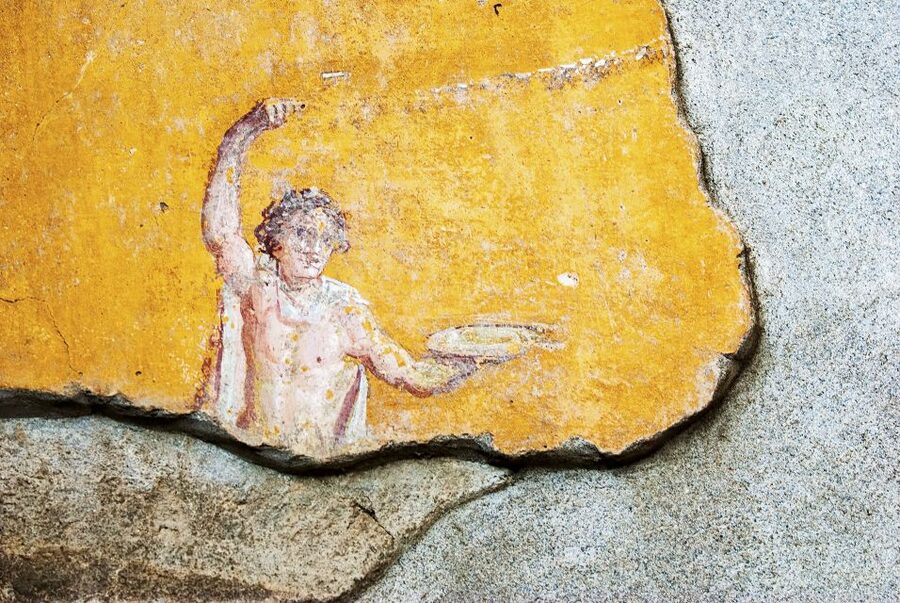
The tour includes several houses, among them the House of the Faun, House of Menander, House of the Tragic Poet, and House of the Vettii. Their names help distinguish one stop from another, but the larger point is the variety of homes and the glimpse they offer into private life.
A guide can give you useful cues about what to notice in a house and why its remains matter. That is especially valuable when the space is damaged or incomplete. You are not being asked to admire walls for their own sake; you are learning how the layout and surviving details help archaeologists understand life in Pompeii.
The Lupanar, or brothel, is one of the tour’s most striking stops. It tends to draw attention because it makes a less formal side of Roman life visible. Your guide can place it in the wider setting of the city instead of leaving it as a quick, sensational curiosity.
The Termopolium Capuano and a bakery bring the tour back to food and commerce. At the bakery, you can see remains of utensils and food. These details are easy to overlook when you move quickly through a large site, but they can be among the most memorable because they connect the ancient city to familiar daily needs: buying, preparing, and eating food.
Baths, Theatre, and the Wider City
The Forum Baths are another stop on the route. Baths were important public facilities in Roman towns, and here they help broaden the picture beyond government, worship, and housing. Your guide can explain what the remains reveal, while you look at the structure itself and imagine how it fit into the city’s daily rhythms.
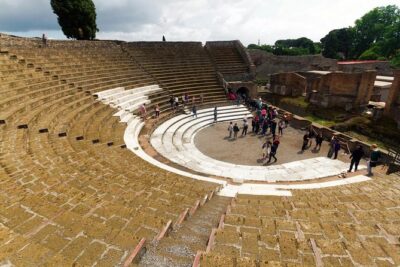
The itinerary also names the Large Theatre and the Amphitheater of Pompeii. These stops remind you that the city had places for public entertainment as well as work and civic business. The tour includes them among its points of interest, but the two-hour limit means you should not expect a long, detailed visit at every site.
This is where a private guide’s pacing can help. A guide can make choices about where to pause and how much detail to give, while also responding to your questions. One party of 19 found the tour informative and well paced, and another appreciated that the guide chose quieter routes on a hot, busy day. That kind of flexibility can make a short visit feel more considered.
Still, Pompeii is extensive, and a quick guided route is not a substitute for seeing every corner. If you have a full day, you may want to explore further after the tour. The guided walk gives you a mental map and some historical footing, which can make independent wandering afterward more rewarding.
A different kind of Campania day:
- Naples: Pompeii and Mt. Vesuvius with Lunch and Wine Tasting
★ 4.5 · 2,454 reviews - Pompeii: Skip-the-line-Ticket and Guided Tour
★ 4.6 · 1,152 reviews - Pompeii: Small-Group Tour of Pompeii and Herculaneum
★ 4.8 · 867 reviews - Pompeii: Guided Tour with Skip-the-Line Entry
★ 4.9 · 812 reviews
The Casts and the Human Cost of the Eruption

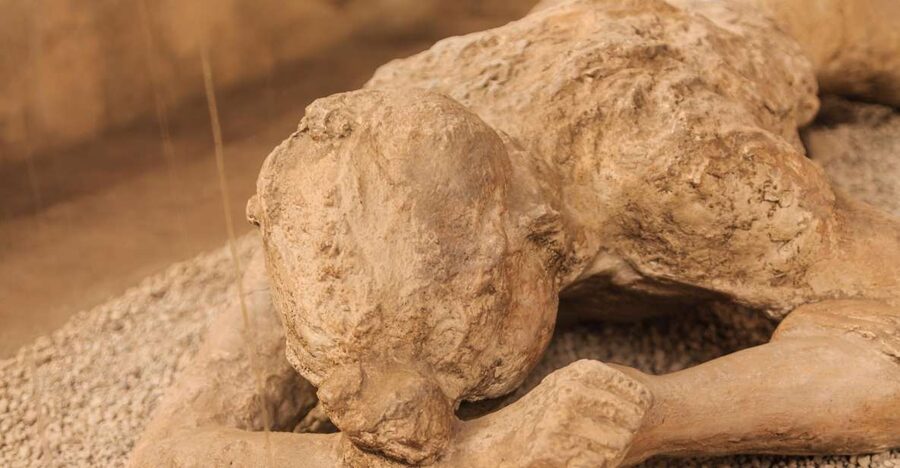
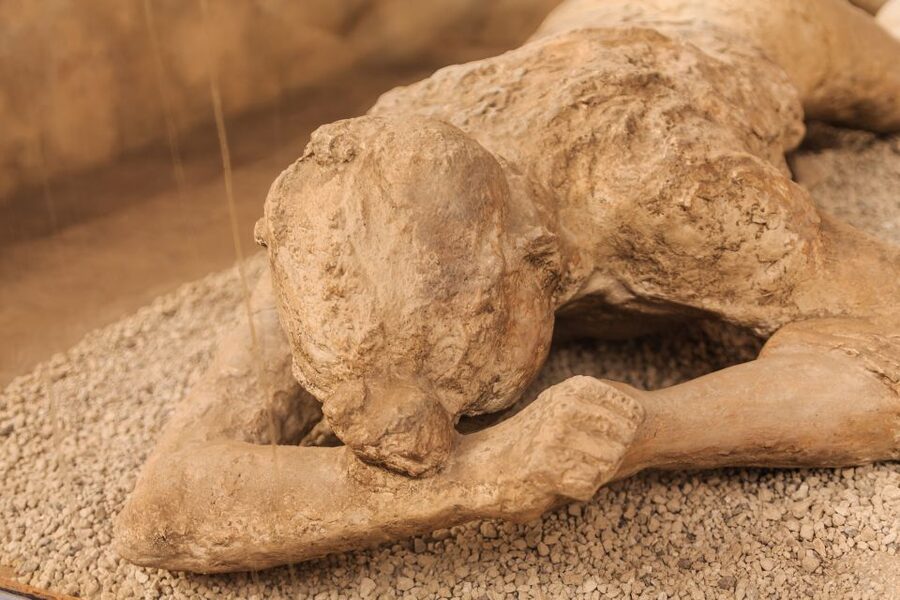
The plaster casts are among the most affecting sights in Pompeii. They preserve the forms of people and animals at the moment of death, making the disaster’s human cost impossible to miss. The tour presents them within the story of the eruption of Vesuvius in 79 AD, when ash and volcanic material buried the town.
The casts can be difficult to look at, and the subject deserves a respectful approach. One guide was particularly praised for handling the tragedy with care while explaining how the preserved remains give later generations a view of Roman life. That balance matters. Pompeii is a remarkable archaeological site, but it is also a place where people died.
Your guide also explains how the buried town was rediscovered in the 18th century. The contrast between the eruption and the later excavation gives the visit a clear arc: a working city, a sudden catastrophe, then the long process of bringing its remains back into view.
Is Two Hours Enough?
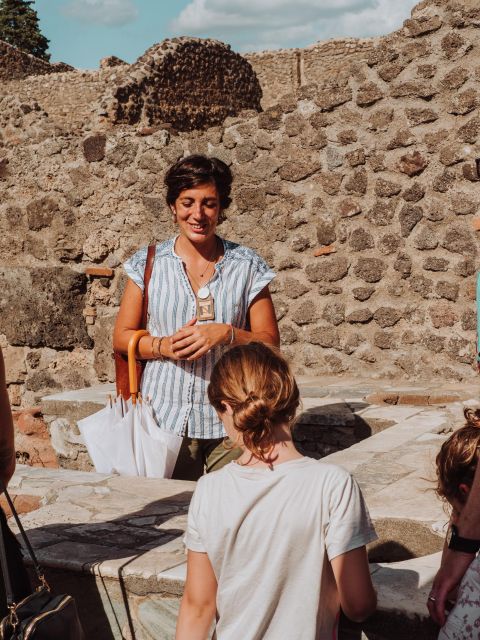
Two hours is enough to see major highlights and learn how to interpret them. It is especially useful if you have limited time, are visiting Pompeii for the first time, or want an expert to organize the visit rather than trying to choose a route yourself.
It is not enough to explore the entire site at leisure. The named stops cover a lot of ground, and the exact time at each is not given. Expect a brisk overview with pauses for explanation, not an exhaustive inspection of every house, street, or public building.
Some people find two hours too short once the guide gets them interested. Ana’s group wished the tour could have continued, and that is a fair sign of its limitation: a good introduction may leave you wanting more. If your schedule allows, consider keeping extra time for the site after the guided portion.
Price, Access, and What to Bring
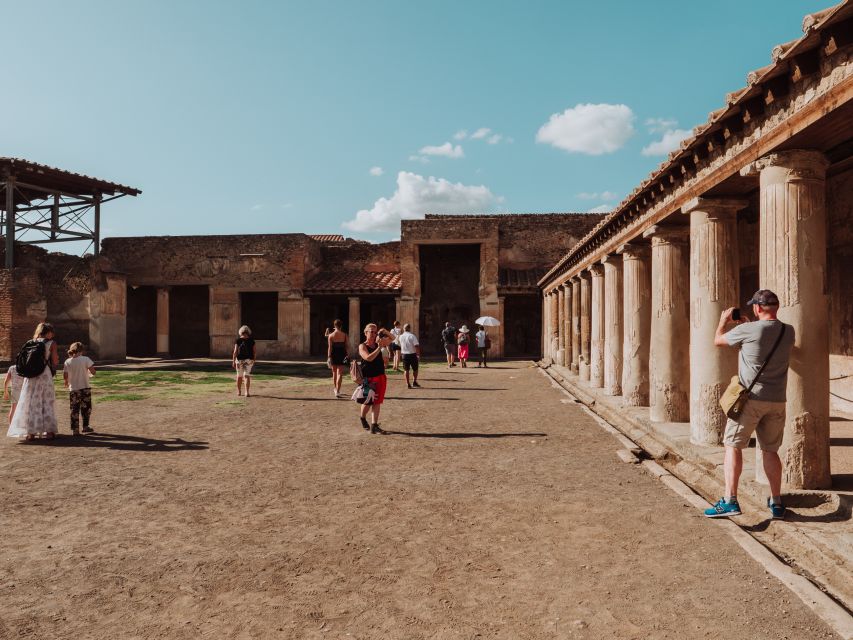
At $175.74 per person, this is not a budget walk. The price includes Pompeii entry tickets and an archaeologist guide, so you are paying for both admission and interpretation. The strongest value is for people who would otherwise spend the same time wandering without understanding the significance of what they see.
The private format adds value if you want the guide’s attention, have questions, or need a pace suited to your group. It is less compelling if you are content to explore independently or already know the site well. You can book in several languages: English, French, German, Spanish, and Italian.
The accessibility information is inconsistent. The activity is described as wheelchair accessible in one place, but also listed as not suitable for wheelchair users. A group with a wheelchair user did complete a tour with a slower pace and an attentive guide, but that does not settle what route or access conditions you can expect. Contact the operator before booking to discuss your specific needs.
Bring comfortable shoes, water, sunglasses, and a sun hat. The site is open-air, and you will spend the tour walking among ruins. If you plan to visit on the first Sunday of the month, entry is free, but tickets cannot be reserved ahead of time and entry is not guaranteed. The tour ordinarily includes entry tickets, so confirm how the free-entry day affects your booking before you rely on it.
Should You Book This Pompeii Tour?
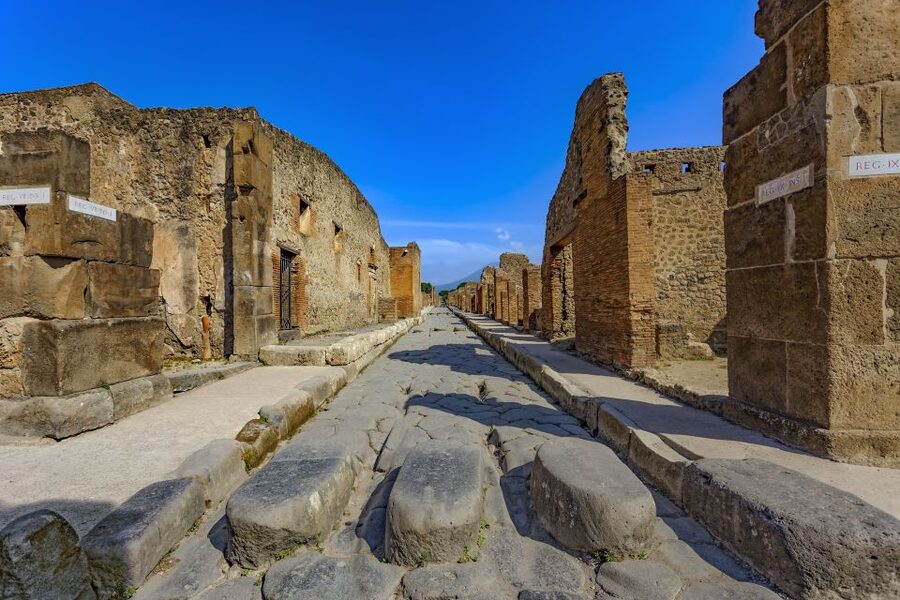
Book it if you want a clear, well-paced introduction to Pompeii and value having an archaeologist explain the Forum, homes, baths, shops, and casts. The private format and repeated praise for guides’ storytelling make it a particularly good fit for first-time visitors, families, and groups who want to ask questions.
Skip it if you prefer to spend several hours exploring at your own pace, or if the per-person price outweighs the value of guided context for you. If you do book, arrive with the meeting instructions ready, wear good walking shoes, and treat the two hours as a starting point rather than your whole Pompeii visit.
FAQ
How long is the tour?
The guided tour lasts two hours. Starting times depend on availability.
What is included in the price?
The price includes the guide, Pompeii entry tickets, and disposable earphones for larger groups.
Which languages are available?
Live guides are available in French, German, Spanish, Italian, and English.
Where does the tour start and end?
The meeting point may vary depending on the option booked. Porta Marina Superiore is given as a meeting location, and the activity ends back at the meeting point.
Is the tour suitable for wheelchair users?
The access information is conflicting: the activity is described as wheelchair accessible, but it is also listed as not suitable for wheelchair users. Contact the operator to confirm whether the route will work for your needs.
Can I enter Pompeii for free on the first Sunday of the month?
Entrance is free on the first Sunday of each month, but tickets cannot be reserved ahead of time and entry is not guaranteed.
Recently added near Pompei Campania
- Pompeii and Vesuvius Cellars: Tour with Pick-Up in Positano★ 4.7 · 3 reviews
- From Sorrento: Pompeii with an Archaeological Guide & Ticket★ 4.6 · 19 reviews
- From Positano: Pompeii Ruins Small Group Guided Tour★ 4.8 · 82 reviews
- From Naples: Pompeii Wheelchair-accessible with a Guide★ 5.0 · 8 reviews
- Pompeii Positano Amalfi Day Trip from Rome by Car, No Bus!★ 5.0 · 5 reviews
- Pompeii & Virtual Museum Private 2-in-1 Kid’s Tour★ 4.9 · 9 reviews
- Pompeii & Vesuvius★ 4.3 · 12 reviews
- Pompeii VIP 3h Tour: Skip-the-line with your Archaeologist★ 4.9 · 13 reviews
Pompeii Tours, compared.
Pompeii: Entry Ticket and Guided Tour with an Archaeologist
Read our review →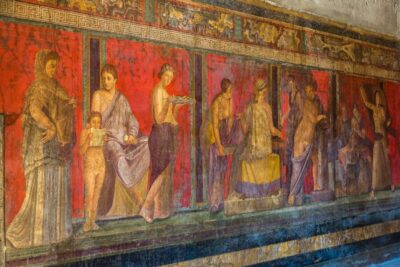
Pompeii: Entry Ticket with Optional Audio Guide
Read our review →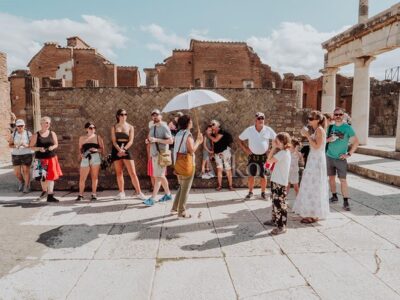
Pompeii: Small Group Tour with an Archaeologist
Read our review →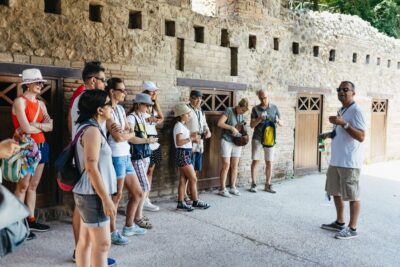
Naples or Sorrento: Full-Day Pompeii and Mount Vesuvius Tour
Read our review →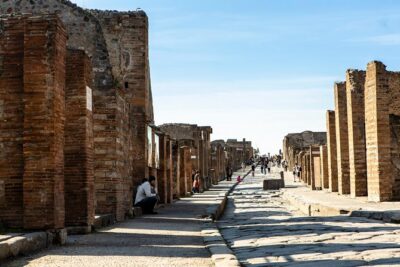
Pompeii & Mt.Vesuvius Day Tour from Naples with Pizza Lunch
Read our review →