
Reviewed · POMPEII TOURS
PompeiI Exclusive Tour with your Archaeologist in a Small Group
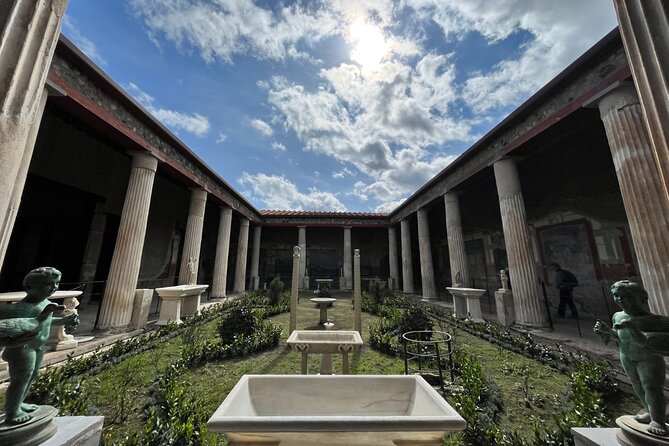
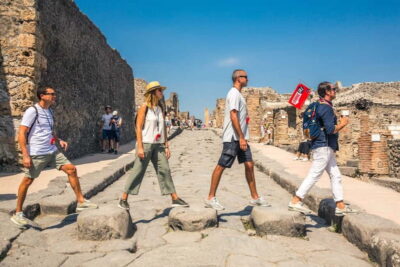
Pompeii makes more sense when someone can explain what you’re looking at. In two hours, this guided walk connects the city’s forum, temples, baths, shops, and homes, turning streets of old stone into a picture of daily Roman life.
I like two things in particular: the guide’s archaeology background can help you understand how experts interpret the site, and the small-group format offers more room for questions than a large walking tour. The route also covers a useful spread of central Pompeii, from its western entrance to the theater.
The main catch is that the €19 park ticket is not included in the $30.25 tour price. You’ll need to buy admission separately, and the two-hour route is a highlights visit, not a full tour of Pompeii.
- The guide meets you at Porta Marina Superiore, outside the park, with a Pompeii Vip sign.
- Twelve stops give you a broad introduction, including the forum, baths, a food shop, and the theater.
- The guide is an authorized archaeology expert, and guides named for this tour include Rafael, Ricardo, Antonio, Ornella, and PierLuigi.
- The tour lasts about two hours, with roughly 10 minutes scheduled at each stop.
- Park admission costs extra: €19 per adult, with free entry for visitors under 18.
- The advertised group maximum is 15, and comfortable walking shoes are a sensible choice for the site.
Why Pompeii is easier to read with a guide
Pompeii is not a single monument with one clear route through it. It is a large ancient city of streets, homes, public buildings, and shops, and the remains can be hard to interpret without context. A guide can help you connect the visible walls and rooms to the way people used them.
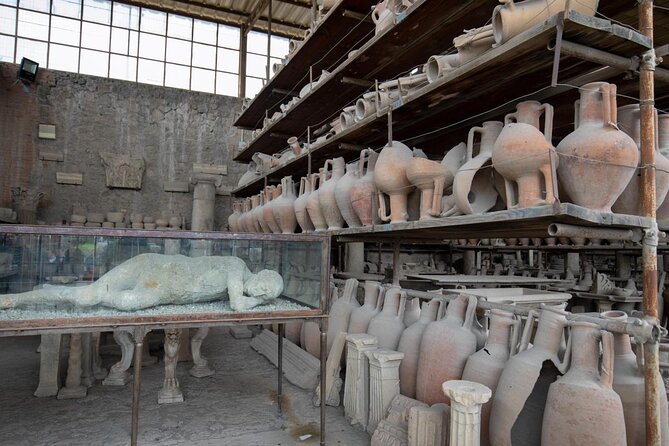
The archaeology focus is useful beyond a list of dates and names. One of the strengths described for guides on this tour is their ability to explain how archaeologists reach conclusions, not just what a building is called. That kind of explanation can change the way you look at a plaster cast, a shop counter, or the layout of a house.
Names associated with the tour include Rafael or Raffaele, Ricardo, Antonio, Ornella, and PierLuigi. The operator assigns the guide, so you should not assume you can request a particular person. The strongest descriptions of the experience emphasize clear explanations, enthusiasm, humor, and time for questions.
The first look at Pompeii from Porta Marina
Your meeting point is Via Villa dei Misteri, 1, outside the archaeological park. At Porta Marina Superiore, look for the guide holding a Pompeii Vip sign. This western entrance takes its name from the road that once led toward the sea.
The gate is a helpful place to begin because it introduces Pompeii as a working city with routes connecting it to the wider world. From there, your guide leads you toward the civic center. The tour’s short stops are designed to make a two-hour visit manageable, but the pace means you should ask questions when something catches your interest.
The separate priority line is intended to help you avoid a long wait at the entrance. Still, the tour price is not your park ticket. The afternoon before the tour, the operator sends a link for purchasing an entry ticket online. You can also buy a ticket on site with the operator’s help, but booking the correct park admission in advance is the clearer plan.
More Pompeii visits near Pompeii:
- Pompeii: Entry Ticket and Guided Tour with an Archaeologist
★ 4.8 · 19,459 reviews - Pompeii: Entry Ticket with Optional Audio Guide
★ 4.2 · 12,360 reviews - Pompeii: Small Group Tour with an Archaeologist
★ 4.8 · 12,264 reviews
Temples, justice, and the heart of the city
The Temple of Venus is one of the first major stops. Venus was Pompeii’s patron goddess, so the temple gives you a glimpse of the religious life and civic identity of the city. The stop is brief, but it sets up a useful contrast between sacred spaces and the practical public buildings nearby.
At the Basilica, the focus shifts to business and justice. This was the forum’s most lavish building, and it served as a place for commercial dealings and legal administration. With a guide, you can begin to picture the forum not simply as an open square, but as the center of a city where people came to trade, settle disputes, and conduct public affairs.
The Sanctuary of Apollo is among Pompeii’s oldest places of worship. Its position along the route from Porta Marina toward the city’s public center reflects how visitors and residents moved through the city. The Forum itself was the main square and the hub of daily life. These connected stops help explain the city’s layout: religious, political, and commercial life met in a relatively compact civic core.
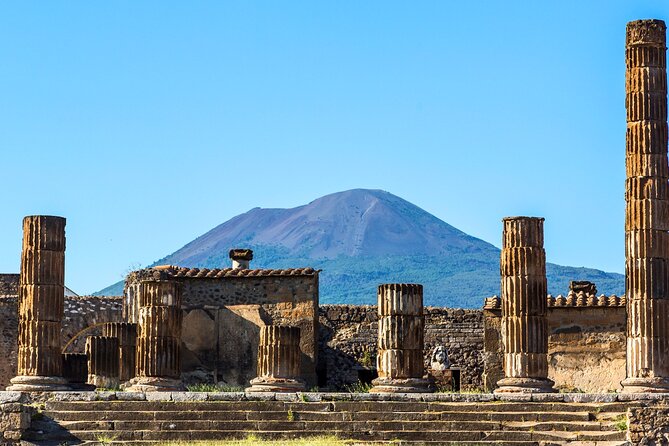
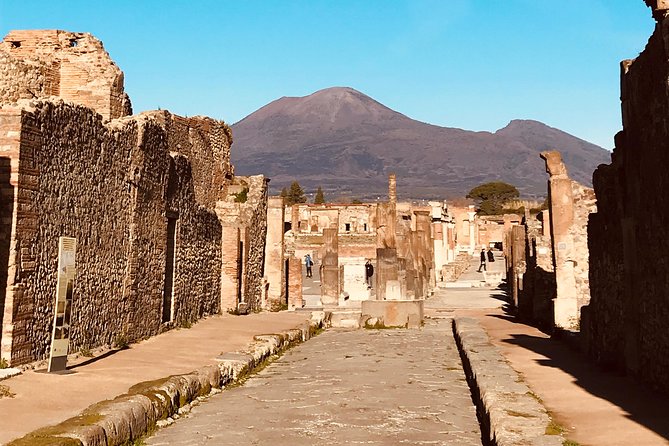
At the northern end of the Forum, the Temple of Jupiter dominates the view. Vesuvius rises behind it, a striking reminder of the volcano that destroyed Pompeii in AD 79. The guide’s explanation can help you take in both the building and its setting, without turning the moment into only a scenic photo stop.
Food stalls, baths, and clues to everyday life

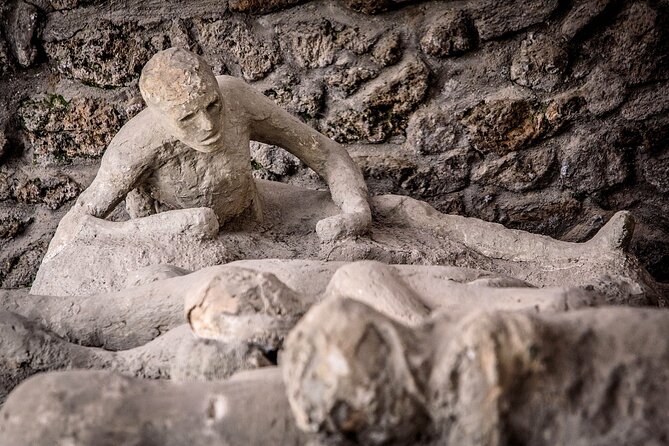
The Macellum was a monumental market building used for selling food and everyday goods. It is also a place where you may see plaster casts of victims. These casts were made using archaeological methods that reveal the positions of bodies at the time of the eruption. They are a powerful, difficult part of the visit, and a guide can give context to what you are seeing.
The Forum Baths offer a different sort of evidence about daily life. They are among the best-preserved features of Pompeii, and the men’s and women’s sections had separate entrances. A short stop here can show how much attention Romans gave to public bathing and how the spaces were arranged for different users.
Next comes the Thermopolium of Vetuzio Placido, an old diner or refreshment shop. Shops like this make Pompeii feel less like a collection of grand public ruins and more like a city where people bought food and went about ordinary routines. I find these everyday places especially useful on a first visit because they make the site’s scale and daily rhythm easier to imagine.
The route does not linger for long at any one location. About 10 minutes is scheduled at each stop, which is enough for an explanation and a few questions, but not a long independent exploration. If a particular building interests you, note it down and return after the tour if time and park access allow.
A house, an ancient main street, and the theater
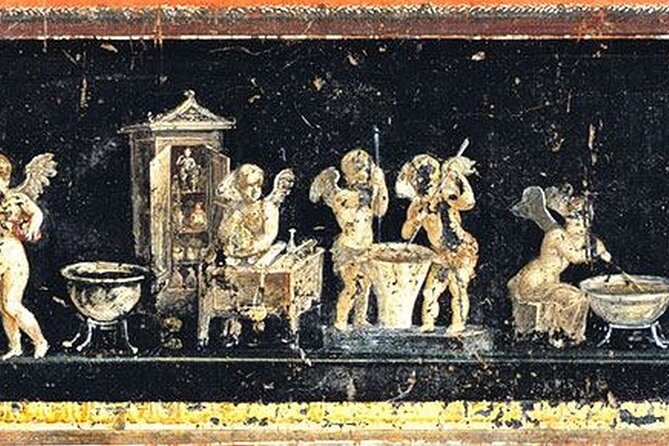
The House of the Faun is one of Pompeii’s largest homes. Its pavement bears the Latin welcome HAVE, a small detail that makes the ancient household feel personal. The House of the Vettii is another celebrated residence, associated with wealth and decorated with imagery connected to Priapus, a god of prosperity.
Both houses are subject to seasonal opening and closing. That means you should treat them as possible stops rather than guaranteed interiors. If one is closed, the guide can still explain the homes’ importance, but you may not be able to see the rooms themselves.
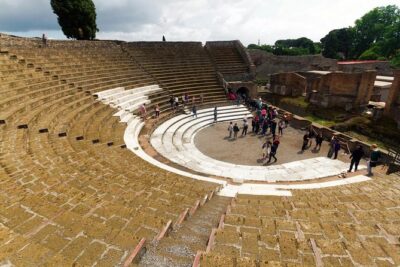
Via dell’Abbondanza was Pompeii’s main ancient street, identified in the tour information as the decumanus maximus. Walking along it helps connect the civic center to the rest of the city. The route then reaches the Teatro Grande, where comedies and tragedies were performed in the Greco-Roman tradition.
The theater is an engaging finish to the central route, but the tour does not cover every famous corner of Pompeii. The amphitheater and brothel are not listed among the stops. If either is a priority, plan to visit it independently before or after the guided walk, allowing time for the park’s size and your own pace.
More small-group tours near Pompeii:
- Pompeii Small Group Tour with an Archaeologist
★ 5.0 · 6,593 reviews - Naples: Pompeii & Mt Vesuvius All-Inclusive Small Group w/ Lunch
★ 4.5 · 2,748 reviews - From Naples: Amalfi Coast & Pompeii Small Group Tour
★ 4.5 · 2,135 reviews - Pompeii and Herculaneum Small Group Tour with an Archaeologist
★ 5.0 · 1,350 reviews
What two hours can, and cannot, cover
A two-hour guided visit is a good way to get your bearings and understand key parts of Pompeii without committing to a full-day tour. The route takes in major civic buildings as well as baths, shops, and houses, giving you more variety than a walk focused only on temples or public monuments.
The trade-off is depth. With around 10 minutes at each of 12 stops, you will not have time to examine every room or wander far off route. The tour is best seen as an introduction, followed by your own exploration if you have the energy and enough time inside the park.
Several accounts describe the two hours as passing quickly, which is a sign of an engaging pace, but it also means you should not expect a slow, exhaustive visit. If you have only a short window in Pompeii, this structure makes sense. If you have a full day, use the guided walk to understand the layout, then revisit the places that interest you most.
Price, tickets, and practical planning
The tour costs $30.25 per person, but park admission is a separate expense: €19 per adult, with free entry for anyone under 18. The booking payment gets you a place on the guided tour, not entry to Pompeii. Keep the two costs distinct when comparing options.
The operator sends a link for buying skip-the-line admission online the afternoon before the tour. The tour information also says you can buy tickets on site with help. Since ticket queues can affect how quickly you reach the guide and enter the site, sort out admission before the day if possible. Read the ticket details carefully so you do not mistake the tour booking for a park entry ticket.
The tour is listed in English, lasts about two hours, and ends back at the meeting point. It is described as suitable for most people and near public transportation. Pompeii’s streets are uneven, so I would choose sturdy, comfortable shoes rather than anything you would not want to walk on for a couple of hours.
The advertised group maximum is 15. That is small enough to make questions and conversation more practical than on a large coach-style tour, though it is not a private visit. The tour is booked on average 25 days ahead, so if your dates are fixed, do not leave it until the last minute.
Free cancellation is available until 24 hours before the start time. Changes made inside that window are not accepted, and late cancellations are not refunded. The experience can also be canceled for poor weather or if the minimum group size is not met, in which case you are offered another date or a refund.
Who should book this Pompeii tour
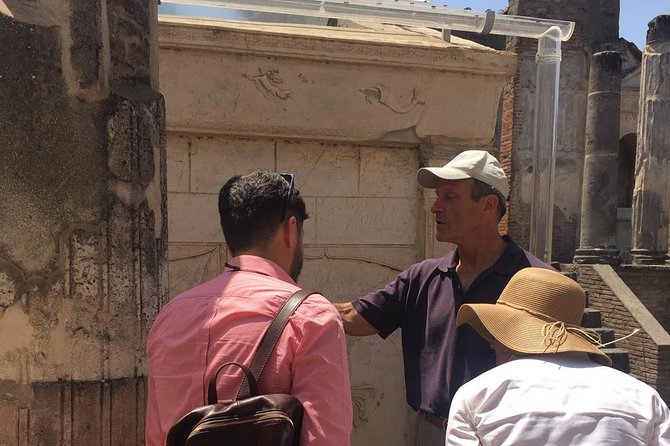
I would choose this tour if you want a clear introduction to Pompeii and value an archaeology guide who can explain how the evidence is read. It suits first-time visitors, families with older children, and anyone who would rather understand the ruins than simply follow a map from one landmark to the next.
It is less suited to someone who wants a private pace, a long visit inside particular houses, or a route that guarantees the amphitheater and brothel. The two-hour format is a focused overview, and seasonal closures can affect access to the houses.
For a first visit, I think the strongest plan is to take the guided tour, then use any remaining park time to revisit a favorite stop or see a place not included on the route. Book it if a compact, guided introduction is what you need. Skip it if you want to explore every section independently and already have the context to make the ruins legible on your own.
FAQ
Is Pompeii park admission included in the tour price?
No. The $30.25 tour price does not include park admission. Adult entry costs €19, and admission is free for visitors under 18.
How long does the tour last?
The tour lasts approximately two hours.
What language is the tour offered in?
The tour is offered in English.
Where does the tour meet?
Meet at Via Villa dei Misteri, 1, outside the archaeological park. The guide waits at Porta Marina Superiore with a Pompeii Vip sign.
How many people can join the tour?
The advertised maximum is 15 travelers.
Does the route include the amphitheater?
No. The listed route includes the Teatro Grande, but not the amphitheater. The brothel is also not included among the scheduled stops.
Recently added near Pompeii
- Capri Tour from Pompeii, Vico Equense & Castellammare di Stabia★ 4.5 · 57 reviews
- Capri, Sorrento and Pompeii Private Tour★ 5.0 · 3 reviews
- Capri, Blue Grotto, Sorrento & Pompeii Private Tour★ 5.0 · 12 reviews
- Day Trip to Capri, Blue Grotto, Sorrento & Pompeii Entry Tickets★ 5.0 · 12 reviews
- Day Trip to Capri, Sorrento and Pompeii from Rome★ 5.0 · 6 reviews
- 3-Days Audio Guide for Pompeii, Herculaneum, Vesuvius and Naples★ 5.0 · 7 reviews
- Minivan Tour | Amalfi Ravello and Pompeii with driver★ 4.5 · 11 reviews
- Amalfi, Ravello & Pompeii: private tour with no-traffic (8-hour)★ 5.0 · 4 reviews
Pompeii Tours, compared.
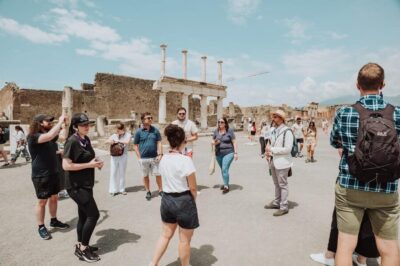
Pompeii: Entry Ticket and Guided Tour with an Archaeologist
Read our review →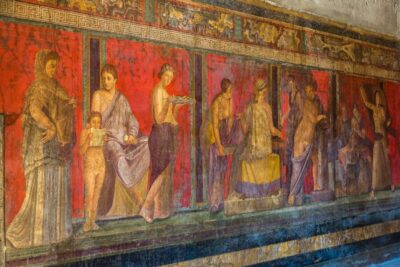
Pompeii: Entry Ticket with Optional Audio Guide
Read our review →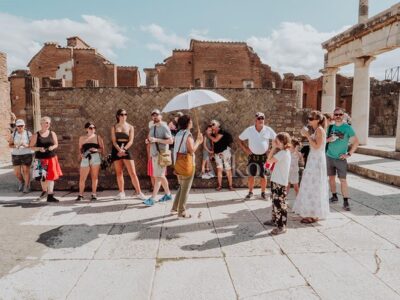
Pompeii: Small Group Tour with an Archaeologist
Read our review →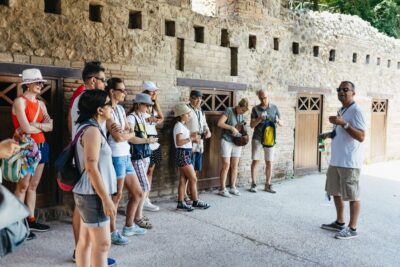
Naples or Sorrento: Full-Day Pompeii and Mount Vesuvius Tour
Read our review →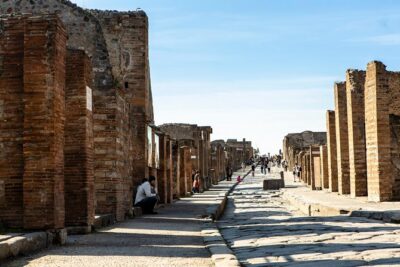
Pompeii & Mt.Vesuvius Day Tour from Naples with Pizza Lunch
Read our review →
Pompeii & Mt Vesuvius All-Inclusive Small Group w/ Lunch
Read our review →Browse the lists this tour appears in