
Reviewed · HERCULANEUM TOURS
2-Hour Private Tour of the Ruins of Herculaneum
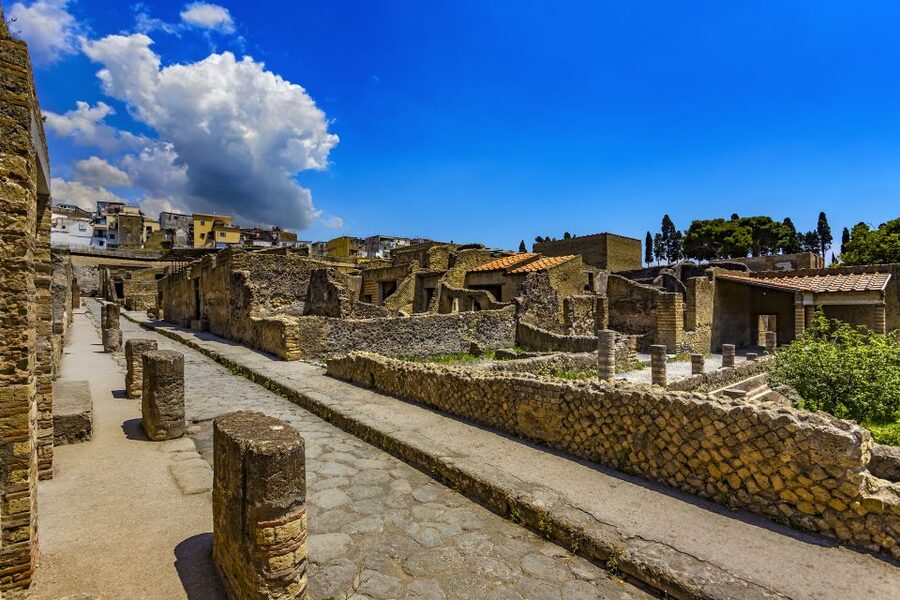
Herculaneum’s Roman streets sit about 75 feet below today’s ground level, buried by the eruption of Mount Vesuvius in 79 AD. On this two-hour private tour, you’ll explore houses, shops and public buildings where wood, food containers and painted walls survived in remarkable detail.
I like that a private guide can connect the site’s vivid details, from carbonized quince roots to skeletons found at the marina. I also like that admission is included, so you can focus on the ruins rather than arranging a separate ticket. One consideration: two hours goes by quickly, and one visitor found the tour ended before the full two hours had passed.
Key points
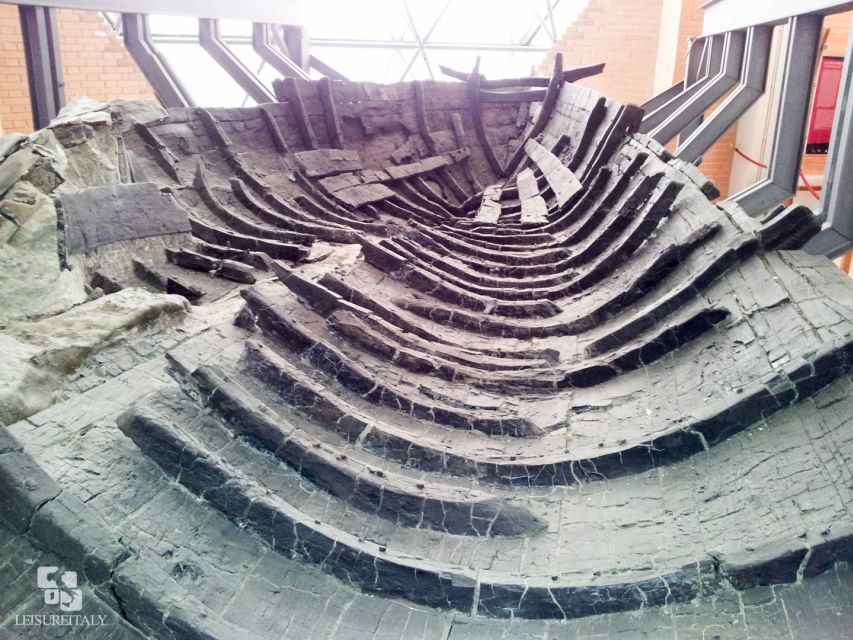
- The marina puts the eruption’s human cost in view: About 300 skeletons were found here, along with a boat that is displayed on weekends.
- The houses preserve everyday life: Look for mosaics, frescoes and carbonized food and wine containers still hanging in a shop.
- A private guide helps connect the details: The group is private, with tours offered in English, Spanish, French and Italian.
- The itinerary includes a standout villa: Villa dei Cervi has luxurious mosaics, frescoes and statues.
- Admission is included: The tour also skips the ticket line, though the first Sunday of the month has a different entry rule.
- Plan for uneven walking and light packing: Comfortable shoes are recommended, and large bags are not allowed.
Herculaneum’s buried streets are the main event
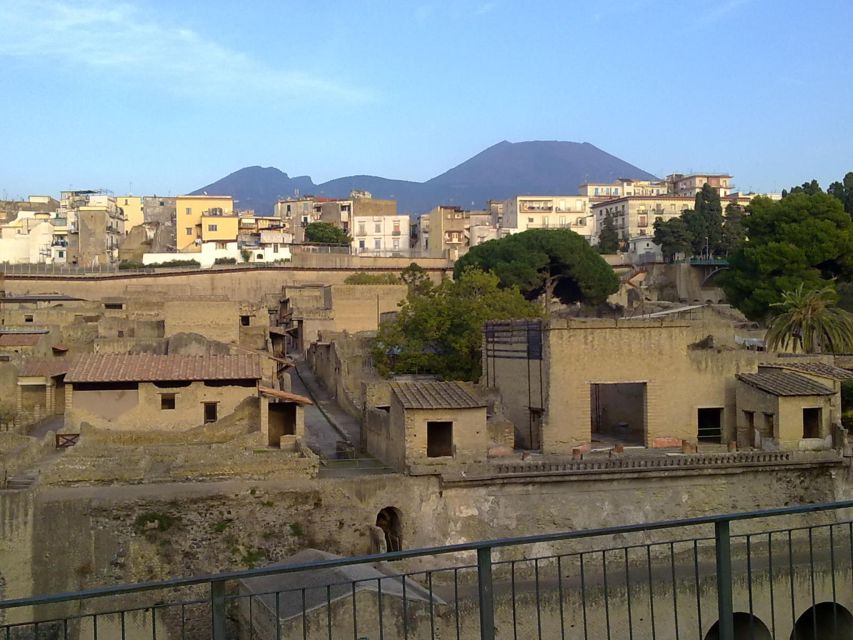
Herculaneum is smaller than Pompeii, but its compact size is part of the appeal. The ancient town lies at the bottom of an archaeological excavation about 75 feet deep, and its buildings offer a close look at Roman domestic life. Instead of trying to cover a sprawling site, you can spend your time noticing the details in a handful of houses, public spaces and shops.
The eruption of August 24, 79 AD buried the town under volcanic material. It stayed under rubble until the 1700s, when its discovery drew wide attention. As you walk, you’ll see why the site still feels startling: this is not only a place of grand villas, but a town with food containers, garden traces and rooms that suggest ordinary routines.
The tour is a good fit if you want context as well as access to the ruins. A guide can explain what you’re looking at and answer questions as they arise, rather than leaving you to piece together every stop on your own. The private format also means you are not sharing the guide’s attention with a large group.
More Herculaneum visits near Naples:
- Herculaneum: Skip-the-Line Guided Tour with Archaeologist
★ 4.8 · 3,439 reviews - Herculaneum Small Group Tour and Ticket With an Archaeologist
★ 5.0 · 994 reviews - Herculaneum: Skip-the-Line Entry Ticket with Audio Guide
★ 4.3 · 870 reviews
The marina makes the catastrophe tangible
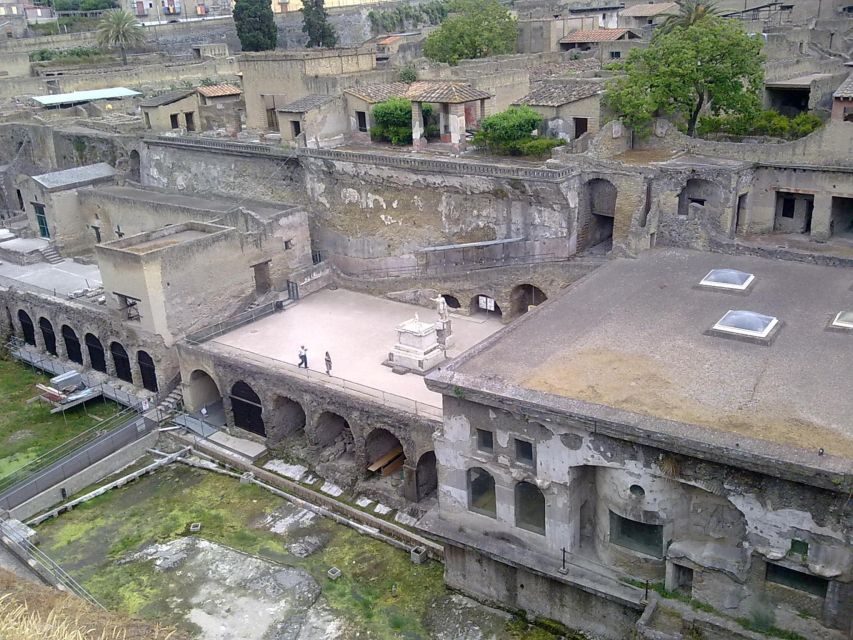
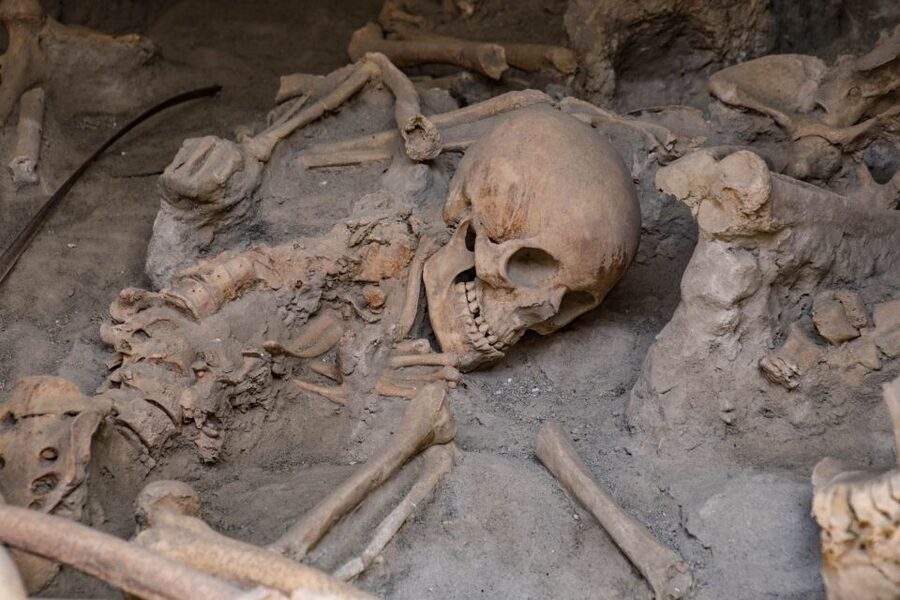
The visit takes you to the marina area, where archaeologists found about 300 human skeletons and a boat. The remains bring the eruption’s human cost into focus in a way that walls and artifacts alone cannot. The boat is on display at weekends, so don’t count on seeing it if your visit falls on another day.
This is a sobering stop, and it may be the most emotionally affecting part of the tour. The best approach is to give it a moment rather than rushing past to the next building. Your guide can help place the find within the wider story of Herculaneum, but the remains themselves need little explanation to make an impression.
The site’s position below modern ground level adds to the experience. You are looking into a town that was buried and later excavated, not simply walking through ruins on an open plain. That change in elevation also means you should be ready for a fair amount of walking around the archaeological area.
A quince garden connects the town to its past
At the House of the Albergo, the garden offers a quieter, more domestic counterpoint to the marina. Quince trees have been replanted here after evidence of carbonized roots showed that the fruit tree once grew in the garden. It is a small detail, but an unusually direct link between the ancient landscape and what you see today.
I like this stop because it makes archaeology feel less like a collection of impressive objects and more like careful reading of traces. A carbonized root can help identify what grew in a garden; replanting the tree gives you a tangible sense of that evidence. You’ll get more from this moment if you look beyond the house itself and consider how the garden was used.
The House of the Albergo is one of several homes that help show how residents lived. The tour also includes villas associated with Herculaneum’s wealthiest citizens, so you can compare domestic spaces and appreciate the different scale and decoration of the town’s residences.
Frescoes in the Council Hall of the Augustali
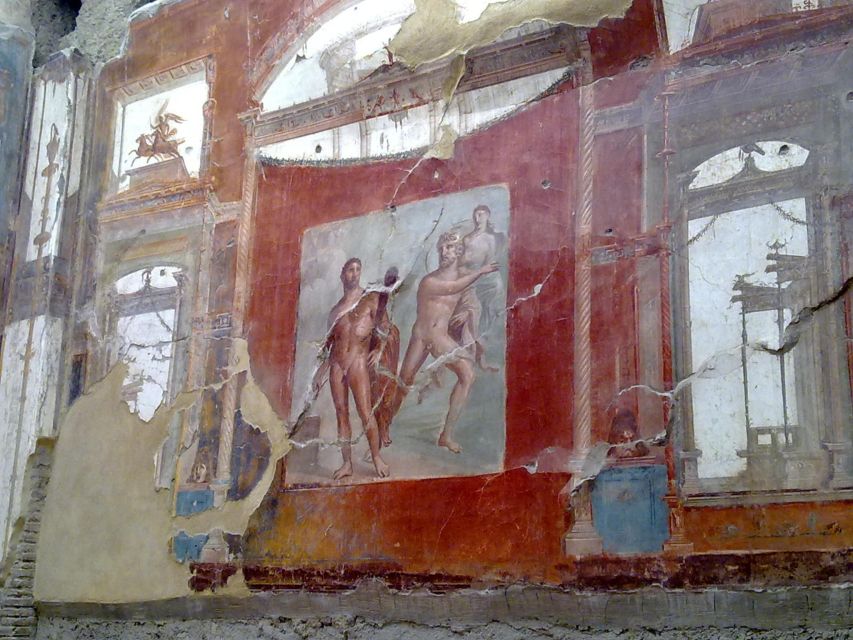
The Council Hall of the Augustali is a key stop for its frescoes depicting Hercules. The paintings give the building visual punch, but they also offer a chance to hear how mythology and public life met in Roman spaces. Your guide can point out what to notice and respond to questions, which is especially helpful when painted scenes are unfamiliar.
A guided visit matters here because a quick glance may not tell you much about the room or its decoration. Two hours is short, so having someone draw your attention to a few useful details can make the stop more rewarding than simply moving from one photographed wall to another.
The tour is designed to cover Herculaneum’s major attractions, not every corner of the archaeological park. If you are the sort of visitor who wants to study each room at length, you may wish you had more time after the guided portion. Think of the tour as a structured introduction, with the option to linger only if your schedule and the site allow.
More private tours near Naples:
- Exclusive Naples Private Food Tour: 6 or 10 Tastings
★ 5.0 · 596 reviews - Private Day Tour: Sorrento, Positano, Amalfi, Ravello from Naples
★ 4.5 · 546 reviews - Private Day tour of Positano, Amalfi and Ravello from Naples
★ 5.0 · 522 reviews - Private Amalfi Coast Tour – Enjoy it with our local english speaking driver
★ 5.0 · 475 reviews
Mosaics at the House of Neptune and Amphitrite
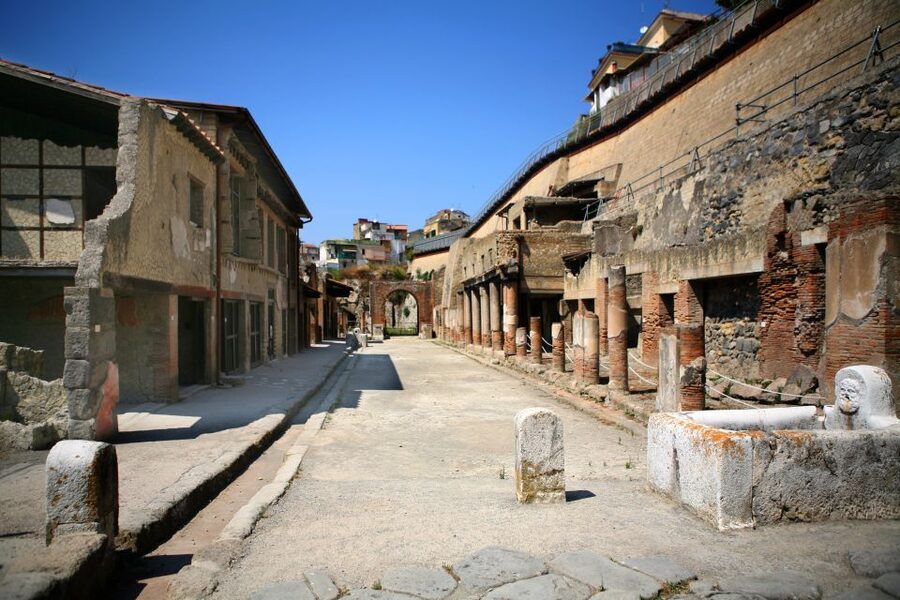
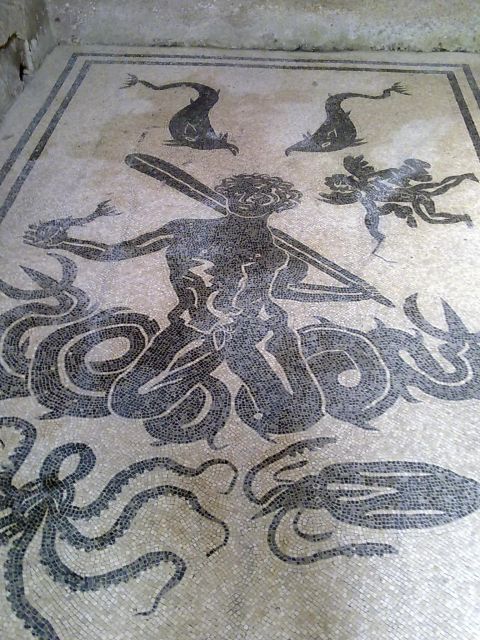
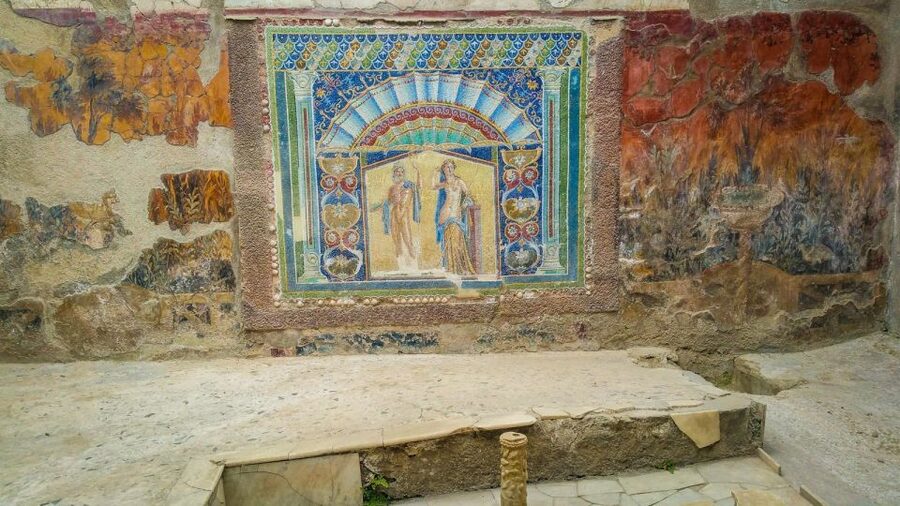
The House of Neptune and Amphitrite is a highlight for its mosaics. Their color and pattern offer a welcome contrast to the stone and earth around them, and they show the care that went into decorating a private home. This is a good place to slow down and look closely at the floor and wall surfaces rather than treating the house as just another stop.
Next door, a shop preserves food and wine containers carbonized by the volcano, still hanging on the walls. This is one of the tour’s most vivid glimpses of daily commerce. The containers help turn an abstract idea, a town interrupted by disaster, into something you can picture: goods stored and sold in a real neighborhood shop.
The combination of decorated home and shop makes this part of the route especially effective. You see both the tastes of householders and the practical business of feeding and supplying a town. It is the kind of contrast a guide can help you notice without overloading the visit with dates and names.
The ancient spa and the Grande Palestra
At the ancient spa, mosaics remain from the Roman bathing complex, including spaces associated with saunas, gyms, hot rooms and cold tubs. The remains give you a sense of how bathing was organized as part of public life. They are also a reminder that Roman architecture served social and practical purposes, not just display.
The Grande Palestra, or Big Gym, adds another public setting to the route. Here, the volcanic evidence and the excavated structures invite you to look with an archaeologist’s eye. You are not simply admiring a finished monument; you are seeing how a buried town has been brought back into view.
The spa and gym are worth seeing, though they may not have the instant visual impact of a colorful mosaic or a villa filled with decoration. Their value lies in the broader picture they provide. Together with the houses and shop, they help make Herculaneum feel like a functioning town rather than a row of isolated ruins.
Villa dei Cervi saves a grand finale
Villa dei Cervi is described as Herculaneum’s most spectacular villa, with luxurious mosaics, frescoes and statues. It is an appropriate high point for a tour that moves from evidence of everyday life to the residences of the wealthy. Look for the contrast between richly decorated interiors and the more modest commercial and public spaces along the way.
The villa’s scale and decoration can help you understand how far apart Roman households could be in wealth and status. You’ll see more than beautiful surfaces: the rooms offer clues to how the elite used and displayed their homes. With a guide, you can ask about details that catch your eye instead of trying to interpret each feature alone.
Because the tour lasts only two hours, Villa dei Cervi may feel like a final flourish rather than a place to explore at length. If this is the part of Herculaneum you most want to study, tell your guide at the start. The private format gives you a chance to express your interests, though the route still has several important stops to cover.
What two hours and $167.66 per person buy you
At $167.66 per person, this is a considerable outlay for a two-hour visit. Admission is included, and the price also buys a private guide, a skip-the-ticket-line arrangement and a focused route through the site. The value depends on how much you want interpretation and individual attention. If you would rather explore at your own pace with no guide, this may not be the right way to spend your budget.
The tour earns its keep if you want help understanding the buildings and evidence as you go. Herculaneum has plenty to see, but a compact site can still feel hard to read without context. A private guide can explain the significance of the garden traces, frescoes, mosaics and volcanic remains while giving you room to ask questions.
There is one timing caveat. The advertised duration is two hours, but a visitor found the tour lasted less than that. If you have a tight schedule, allow a little flexibility rather than planning an important connection immediately afterward. At the same time, keep your expectations realistic: even a full two hours is an introduction, not a close examination of every part of the site.
This tour can also work well after a visit to Pompeii. Seeing both sites in one day gives you a chance to compare them, and Herculaneum’s more compact footprint makes it a practical second stop. Just remember that a morning at Pompeii followed by two hours of walking at Herculaneum makes for a substantial day.
Practical details before you book
Meet your guide at the only ticket office in Herculaneum Archaeological Park. The guide will hold a sign with your name, and the tour ends back at the meeting point. Admission is included, and the tour is offered in English, Spanish, French and Italian.
Wear comfortable shoes and leave luggage or large bags behind, since they are not allowed. The tour is not suitable for wheelchair users or people with mobility impairments, so consider that restriction carefully before booking.
On the first Sunday of each month, entrance is free, but tickets cannot be reserved ahead of time and entry is not guaranteed. That makes the guided tour less predictable on that day. If you want a more assured plan, choose another date.
You can reserve now and pay later, and cancellation up to 24 hours in advance is eligible for a full refund. Starting times depend on availability, so check the schedule that suits your day.
Should you book this Herculaneum tour?
Book it if you want a private guide to bring the houses, mosaics, public buildings and eruption evidence into focus, and if two hours is the right amount of time for your plans. The marina, the House of Neptune and Amphitrite, and Villa dei Cervi give the route a strong mix of human, domestic and grand-scale history.
Skip it if you prefer to explore without a guide, need a slower pace, or want to spend much longer at individual buildings. The price is easier to justify when you value private attention and included admission. If you are pairing Herculaneum with Pompeii, this tour offers a compact, guided way to see how the two ancient towns differ.
FAQ
How long is the Herculaneum tour?
The tour is scheduled for two hours. Starting times depend on availability.
What is the price?
The listed price is $167.66 per person.
Is admission included?
Yes. The admission fee is included in the tour price.
Where does the tour start?
Meet your guide at the only ticket office in Herculaneum Archaeological Park. The guide will hold a sign with your name.
Where does the tour end?
The tour ends back at the meeting point.
What languages are available?
The live guide is available in English, Spanish, French and Italian.
Is this a private tour?
Yes. The tour is for a private group.
Can I see the boat found at the marina?
The boat is on display at weekends. The tour visits the marina area where the boat and about 300 human skeletons were found.
Is the tour suitable for wheelchair users?
No. It is listed as not suitable for wheelchair users or people with mobility impairments.
What should I bring, and what is not allowed?
Wear comfortable shoes. Luggage and large bags are not allowed.
Recently added near Naples
- Tiramisù Making Class With Limoncello or Meloncello Tasting★ 5.0 · 17 reviews
- Private Natural Wine Vs Byodinamic and Organic Wine Tour★ 5.0 · 6 reviews
- Caserta Royal Palace tour★ 5.0 · 4 reviews
- Tour in the Charterhouse of St. Martin and Pedamentina with an art expert★ 4.5 · 3 reviews
- Private City Kickstart Tour: Naples★ 5.0 · 7 reviews
- Caserta Royal Palace Private Walking Tour★ 4.5 · 12 reviews
- Caserta Royal Palace small group tour★ 5.0 · 6 reviews
- Caserta Royal Palace Tour From Naples★ 4.5 · 21 reviews
Herculaneum Tours, compared.
Herculaneum: Skip-the-Line Guided Tour with Archaeologist
Read our review →
Pompeii and Herculaneum Small Group Tour with an Archaeologist
Read our review →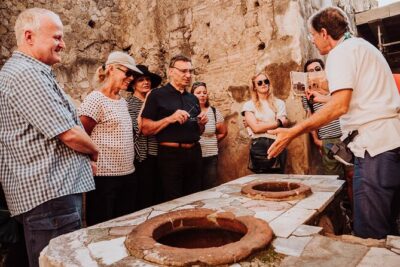
Herculaneum Small Group Tour and Ticket With an Archaeologist
Read our review →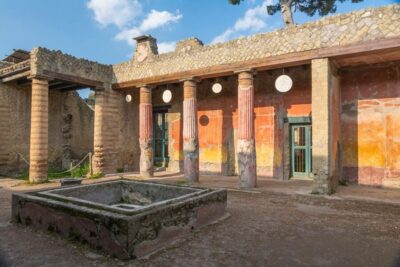
Herculaneum: Skip-the-Line Entry Ticket with Audio Guide
Read our review →
Pompeii & Herculaneum with Archaeologist Guide
Read our review →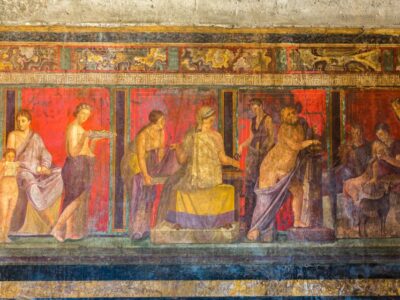
Pompeii, Herculaneum, & Vesuvius Full-Day Tour
Read our review →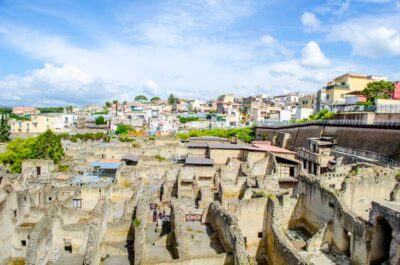
Ercolano: Herculaneum Entry Ticket with Optional Audio Guide
Read our review →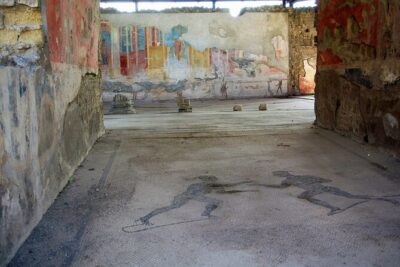
Day Trip of Pompeii, Herculaneum and Vesuvius from Naples
Read our review →Browse the lists this tour appears in