
Reviewed · HERCULANEUM TOURS
Herculaneum: Skip-the-Line Entry Ticket with Audio Guide
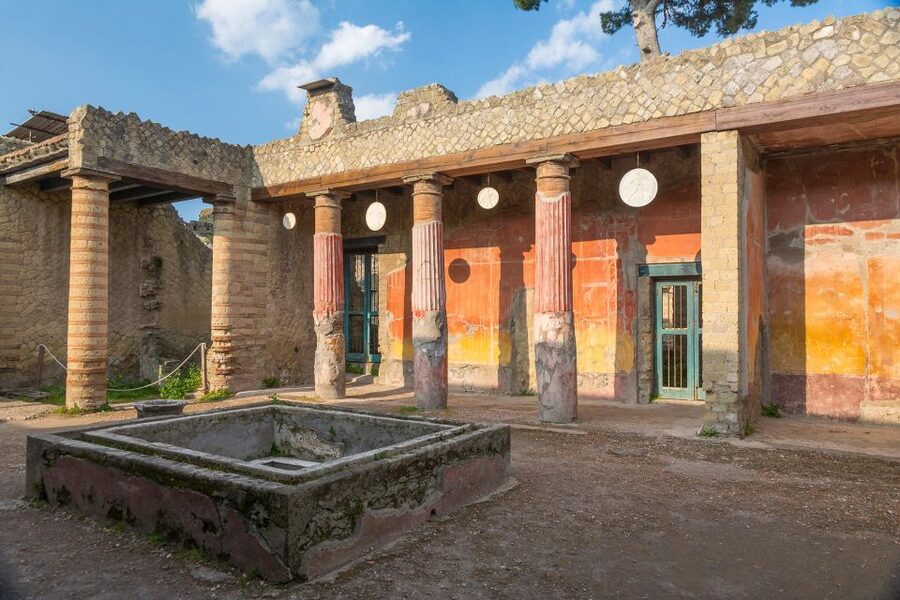
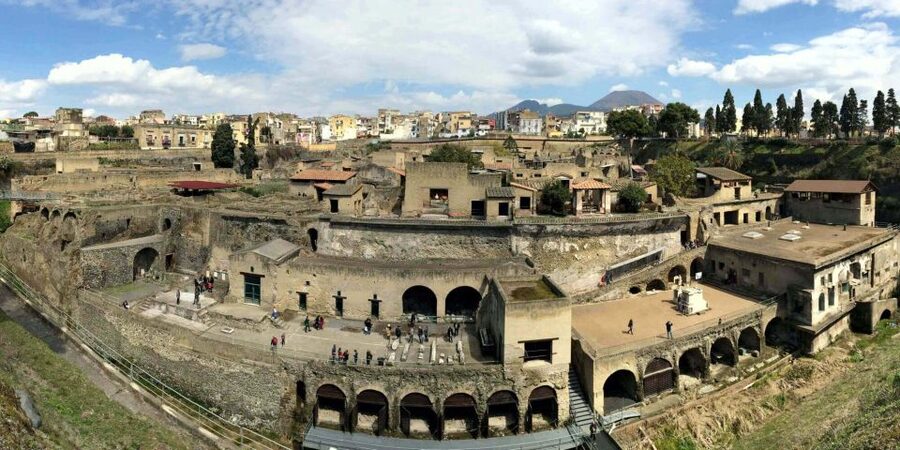
Herculaneum preserves an unusually close view of Roman life: you can step among houses with painted walls, mosaics and wooden doors, then reach the area where people waited for rescue from the sea during the eruption of Vesuvius in 79 AD. The ruins are more compact than Pompeii, but there is plenty to see.
I like two things in particular: the audio guide lets you linger where you want, and the surviving details make ordinary Roman homes feel tangible, from public fountains to richly decorated rooms. A map helps you connect those sights without having to follow a fixed group.
One caution: the audio guide’s numbered stops may not match the signs on site, and the ticket wording needs a close read. Some booking choices include entry, while the Audio Guide no ticket option does not. Confirm what you have bought before arriving.
What to know before you book
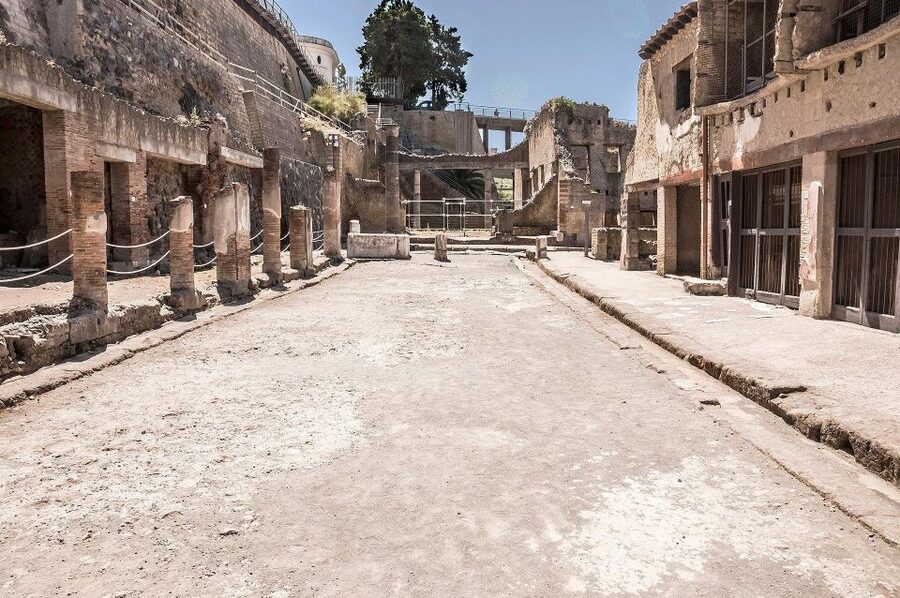
- A compact site with a lot to examine: You can see homes, a market, fountains, temples and a theatre without tackling Pompeii’s much larger sprawl.
- A moving final stop: The area where about 300 people perished while hoping for rescue from the sea brings the eruption’s human cost into focus.
- A self-guided visit: The audio guide is available in English, French, German, Italian and Spanish, and you can explore at your own pace.
- A map is part of the plan: Use it to locate the main sights, but ask for one at the start if it is not provided with your guide.
- Check the ticket choice carefully: The Audio Guide no ticket option requires you to buy the entry ticket separately.
- Bring sturdy shoes and ID: Cobblestones and steep steps call for comfortable footwear. A passport or ID card is listed as something to bring.
Herculaneum gives you a closer look at Roman life
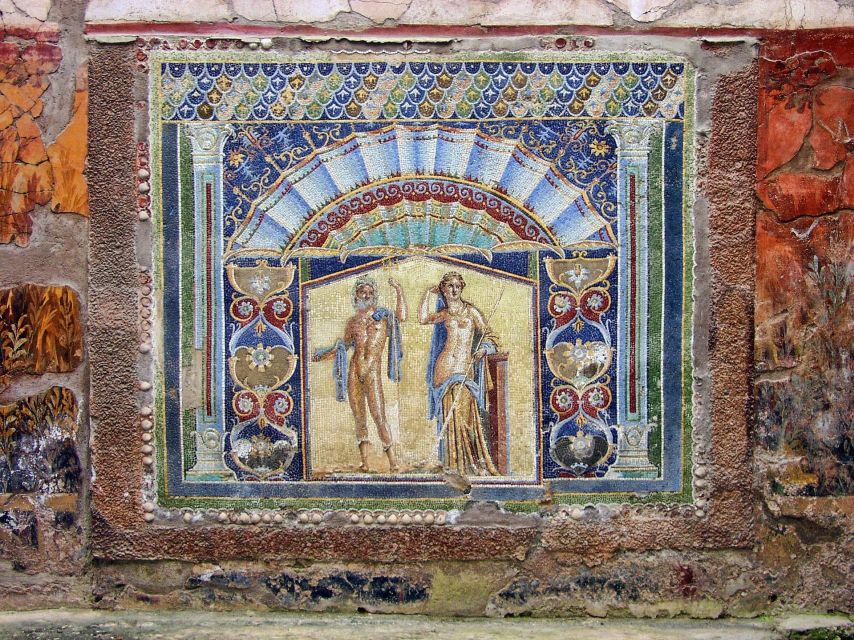
Herculaneum is not simply a smaller version of Pompeii. Its scale makes it easier to take in on a single visit, while its preserved houses and decorative details reward a slower walk. You can look closely at painted walls, mosaics, statues and wooden doors, then imagine how these spaces worked as homes, shops and public places.
The eruption buried the town in 79 AD. As you walk through the ruins, the suddenness of that event is hard to miss: familiar details of daily life remain beside reminders of the people who did not escape. The contrast between domestic rooms and the remains found near the sea is a defining part of the visit.
I would not treat Herculaneum as a quick stop just because the site is compact. Two to three hours is a sensible target if you want to use the audio guide and explore several buildings. Some visitors spend around four hours, especially when they pause often or take a break.
More Herculaneum visits near Naples:
- Herculaneum: Skip-the-Line Guided Tour with Archaeologist
★ 4.8 · 3,439 reviews - Herculaneum Small Group Tour and Ticket With an Archaeologist
★ 5.0 · 994 reviews - From Naples: Pompeii & Herculaneum with Archaeologist Guide
★ 4.8 · 665 reviews
Getting oriented with the map and audio guide
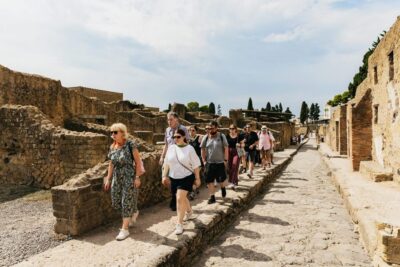
At the entrance, show your ticket at the Herculaneum Archaeological Park ticket office. The audio guide and map are intended to help you set your own route rather than follow a guide or group. The guide is available in five languages: English, French, German, Italian and Spanish.
First, get your bearings with the map. The audio tour uses numbered points, but the numbers in the app or on the device do not always line up neatly with the numbers displayed at the site. The commentary can still be useful, but you may need to look around, check the map and choose the next point yourself.
If the device or instructions are unclear, ask the staff where to collect the guide and which direction to start. Some visitors have had to go between separate desks for the guide and entry ticket, so allow a little time to sort out the handover. You may also find that a particular building or stop is closed, or that a feature is not obvious once you enter.
The audio commentary gives you historical context without setting your pace. I like that freedom: listen to a section, pause to study a room, then move on when you are ready. The trade-off is that it is not the same as having a live guide beside you to answer questions or point out details in real time.
Villas, frescoes and the rooms people called home
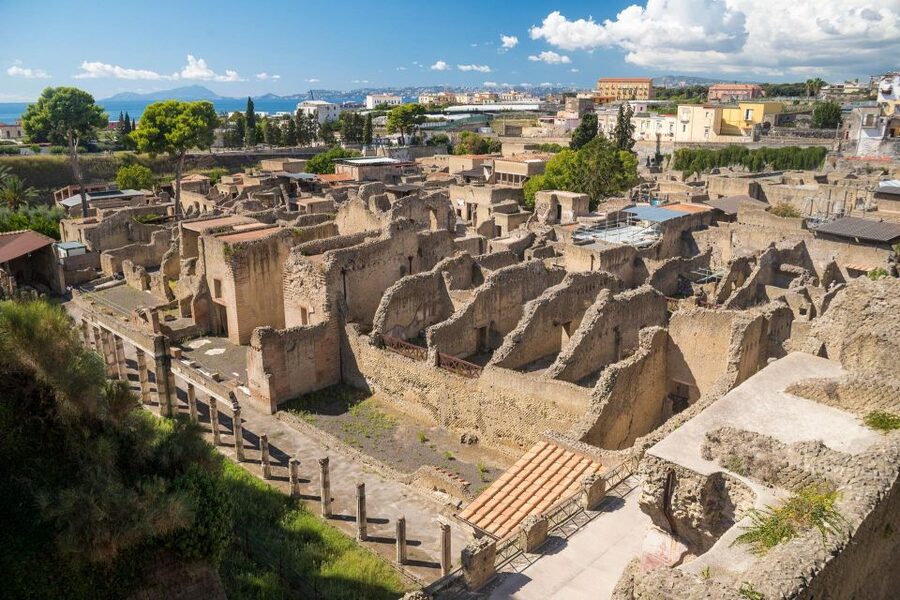
The houses are among the strongest reasons to visit. Herculaneum’s preserved interiors give you more than foundations to interpret: look for painted walls, mosaics, statues and wooden doors that survived the burial. Even small details can help you picture how Romans moved through their homes and decorated their rooms.
The audio guide is most useful here when it explains what a space was for and how its decoration fit into everyday life. Rather than rushing from one landmark to the next, choose a few buildings and give yourself time to look closely. The map lets you move between points in an order that suits you, though the mismatch between guide numbers and site signs can make navigation less tidy than it should be.
One of the visit’s most revealing comparisons is between modest quarters associated with enslaved people and the grander living spaces of wealthy Romans. That contrast adds social context to the beautiful surfaces. Frescoes and mosaics are striking, but they also belonged to a society divided sharply by wealth and status.
The site includes ancient temples with depictions of gods, too. These places can feel quieter than the best-known houses, so they are worth seeking out rather than spending your entire visit on the headline sights.
Market, fountains and public spaces
The map points you toward the ancient market, public fountains and theatre. These stops widen the picture beyond private homes: Roman life depended on shared spaces as much as on family rooms. A market offers a way to think about daily exchange, while fountains and other public features show how the town’s residents used common facilities.
Here, the audio guide helps turn visible remains into a sequence of everyday activities. You are not just looking at old stone; you are considering how people moved through the town, met one another and made use of its public places. The self-guided format means you can stop at a feature that catches your eye instead of keeping pace with a group.
Do not expect every building to be open or every feature to be clearly marked. Some points may be temporarily closed, and interior details are not always easy to identify without signage. If you cannot match a number to what you see, use the map to orient yourself and choose another stop. The value is in the overall picture, not in completing every audio entry in strict order.
More audio tours near Naples:
- Pompeii: Skip-the-Line Entry Ticket with Audio Guide or Tour
★ 4.1 · 1,364 reviews - Naples: National Archaeological Museum Ticket & Audio App
★ 4.4 · 617 reviews - From Naples: Caserta Palace Ticket and Train with Audioguide
★ 4.3 · 348 reviews - Naples: Pompeii Self Guided Audio Tour
★ 3.9 · 211 reviews
The shoreline remains and the weight of the eruption
The most sobering part of the visit is the area where about 300 people died while hoping for rescue from the sea. The remains make the catastrophe personal in a way that a view of walls or streets cannot. It is a quiet, difficult stop, and many people find it stays with them after they leave.
This is a useful place to slow down. The audio guide can provide context, but there is no need to race through the commentary or treat the site like a checklist. Herculaneum’s appeal lies partly in this shift: one moment you are studying a painted room, and the next you are confronted with the human cost of the eruption.
Plan your route so you have enough time here rather than leaving it for the last few minutes. Some people prefer to finish with this area; others find it easier to visit when they reach it naturally. The map and flexible order give you that choice.
How Herculaneum compares with Pompeii
If you have already seen Pompeii, Herculaneum adds a different kind of visit rather than repeating the same one. It is smaller and more contained, and its surviving houses and domestic details can make it easier to picture daily life. Pompeii’s scale can demand much more time; Herculaneum is a practical choice when you want a substantial archaeological visit without taking on such a vast site.
If you have time for both, I would not make them an either-or choice. Herculaneum brings you closer to individual rooms and objects, while Pompeii gives you a wider sense of an ancient city. If you can visit only one, consider what matters more to you: breadth and scale, or a more compact walk with particularly well-preserved details.
The quieter feel is another draw, though it is not a promise of an empty site. Arriving early may help you begin before the site gets busier, but the skip-the-line wording should not be taken as a guarantee of no waiting. At some times there may be little or no queue; at others, ticket collection and entry may involve separate steps.
Price, ticket options and practical value
The listed price is $15 per person, but check the exact option before paying. The activity information says the entry ticket is selected as an extra with the Audio Guide no ticket choice. In that case, the audio guide and entry are not bundled into one purchase, and you will need to buy the park ticket separately. Confirm your booking details so you know what the price covers.
If your choice includes entry, the price can be good value for a self-guided visit that may take several hours. You get the freedom to explore independently, along with an audio guide and map. But if you are expecting a live guide or a guaranteed fast entrance, this is not the product to assume you have booked: a guide is not included, and the practical ticket handover may involve more than one desk.
The booking details offer free cancellation up to 24 hours in advance and a reserve-now, pay-later option. Availability and starting times depend on the date you choose. Bring a passport or ID card, as well as comfortable shoes for cobbles and steep steps. There are places to sit around the site, and a place to buy a snack or drink has been noted, but do not let that replace a plan to bring water and take breaks as needed.
Is the audio guide enough, or should you look for a live guide?
For independent visitors, the audio guide is a useful way to add context while keeping control of the route. Its weak spot is navigation: the numbered stops can be confusing, and some commentary may not correspond neatly to what is in front of you. Ask for a map at the beginning, and think of the audio as a set of explanations you can use in flexible order.
A live guide is a different experience and is not included with this booking. Guides named by visitors who took guided tours include Tony, Fabio and Amara, but you should not assume one of them, or a guided upgrade, will be available with this ticket. If personal explanations and the chance to ask questions matter to you, check for a separate guided option before you book.
Families can also make good use of the self-guided format because they can pause, sit down and choose which areas to explore. The ground is uneven, though, and there are steep steps, so comfortable shoes matter. If anyone in your group needs a particular level of access, the information here does not specify access arrangements; check with the site before setting out.
Should you book this Herculaneum visit?
Book it if you want to explore at your own pace and care about Roman homes, decorative details and the human story of the eruption. The audio guide and map give you a framework, while the compact site makes it easier to spend time with individual buildings than you might manage across Pompeii.
Pause before booking if you expect a live guide or assume that every ticket option includes park entry. Read the option name, confirm the ticket is included, and be ready to orient yourself if the audio numbers do not match the site signs. With those points clear, this is a worthwhile way to see Herculaneum on your own terms.
FAQ
Is the entry ticket included in the price?
Not necessarily. The Audio Guide no ticket option does not include entry, and the park ticket must be purchased separately. Check the exact option before booking.
Is a live guide included?
No. The activity includes an audio guide and map, not a live guide.
Which languages are available for the audio guide?
The audio guide is available in English, French, German, Italian and Spanish.
How much time should I allow for the visit?
The activity is listed as lasting one day. The site itself can take several hours to explore; around two to three hours is a useful planning allowance if you want time for the main areas and audio commentary.
What should I bring?
Bring a passport or ID card and comfortable shoes. The site has cobblestones and some steep steps.
Can I cancel my booking?
Yes. The activity offers free cancellation up to 24 hours in advance for a full refund.
More skip-the-line tickets near Naples
- Naples: Naples Underground Entry Ticket and Guided Tour
★ 4.4 · 21,781 reviews - Naples: Catacombs of San Gennaro Entry Ticket & Guided Tour
★ 4.6 · 7,941 reviews - Naples: Downtown Tour with Veiled Christ & St Clare Tickets
★ 4.9 · 6,462 reviews - Naples: Hop-on Hop-off Bus Tour 24-Hour Ticket
★ 4.3 · 5,157 reviews
Recently added near Naples
- Tiramisù Making Class With Limoncello or Meloncello Tasting★ 5.0 · 17 reviews
- Private Natural Wine Vs Byodinamic and Organic Wine Tour★ 5.0 · 6 reviews
- Caserta Royal Palace tour★ 5.0 · 4 reviews
- Tour in the Charterhouse of St. Martin and Pedamentina with an art expert★ 4.5 · 3 reviews
- Private City Kickstart Tour: Naples★ 5.0 · 7 reviews
- Caserta Royal Palace Private Walking Tour★ 4.5 · 12 reviews
- Caserta Royal Palace small group tour★ 5.0 · 6 reviews
- Caserta Royal Palace Entrance Ticket★ 3.5 · 78 reviews
Herculaneum Tours, compared.
Herculaneum: Skip-the-Line Guided Tour with Archaeologist
Read our review →
Pompeii and Herculaneum Small Group Tour with an Archaeologist
Read our review →
Herculaneum Small Group Tour and Ticket With an Archaeologist
Read our review →
Pompeii & Herculaneum with Archaeologist Guide
Read our review →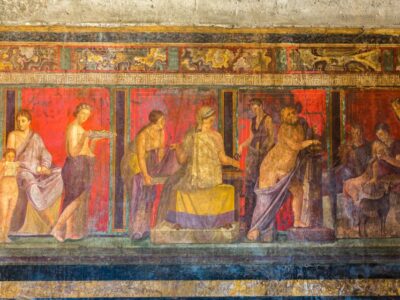
Pompeii, Herculaneum, & Vesuvius Full-Day Tour
Read our review →
Ercolano: Herculaneum Entry Ticket with Optional Audio Guide
Read our review →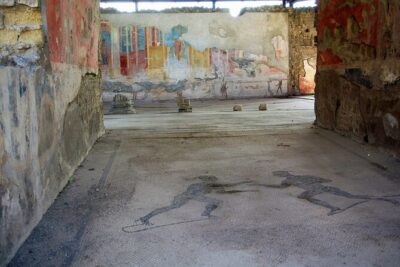
Day Trip of Pompeii, Herculaneum and Vesuvius from Naples
Read our review →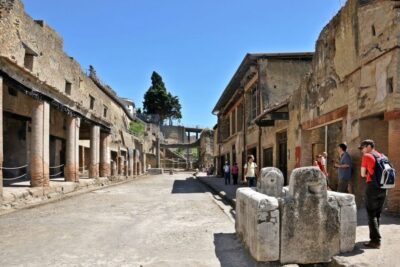
Browse the lists this tour appears in