
Reviewed · HERCULANEUM TOURS
Pompeii: Small-Group Tour of Pompeii and Herculaneum
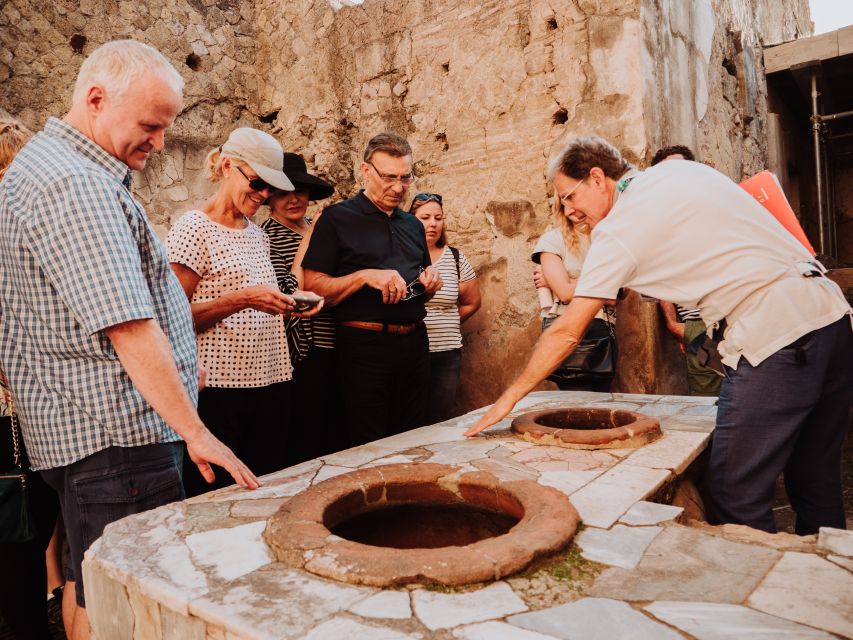
Pompeii gives you the scale of a Roman city; Herculaneum brings you closer to the details of a Roman home. On this half-day tour, an archaeologist helps connect the streets, wall paintings and household objects to the lives that once filled them.
I like that one guide leads you through both sites, so the contrast between them becomes part of the story, not just two separate visits. I also like the group cap of 20: it offers a more manageable way to ask questions and follow the guide than a large coach tour.
The trade-off is a tight schedule. You get only 30 minutes for a break in Pompeii, and the tour ends at Herculaneum, not back in Pompeii. If you want a long lunch or an unhurried look at every corner, plan extra time on another day.
- Pompeii first: Spend two guided hours among the streets and ruins of the larger city.
- Herculaneum next: See a smaller site where upper floors, wooden objects, paintings and mosaics have survived.
- An archaeologist as guide: Expect historical context and explanations of what you are seeing, rather than a walk past ruins with little interpretation.
- Train between sites: Ride the Circumvesuviana to Ercolano, with the transfer listed as about 20 to 30 minutes.
- A compact schedule: The tour lasts about 5.5 hours, with two hours at each site and a short Pompeii break.
Pompeii’s scale makes a guide especially useful
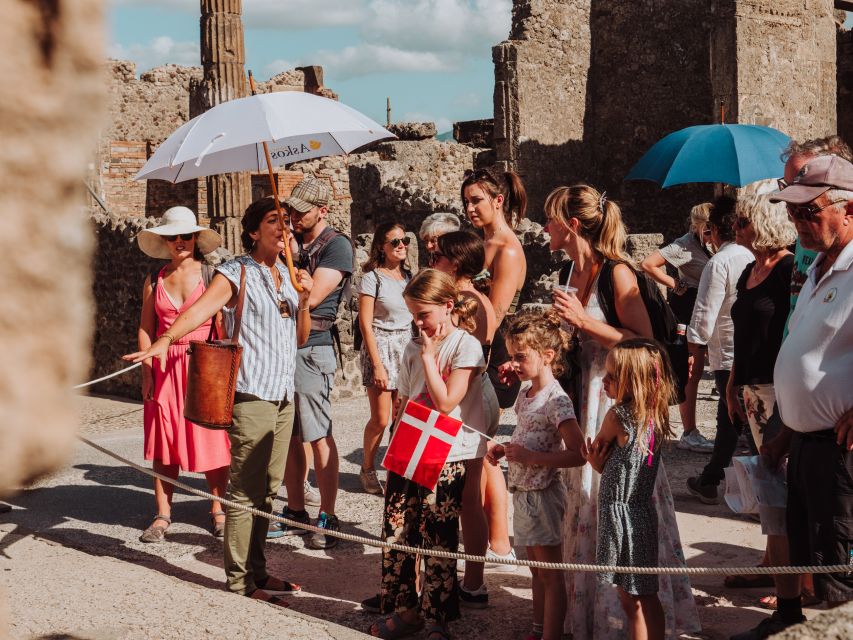
Pompeii is not a single monument with one clear viewpoint. It is a large ancient city of streets, homes and public spaces, with much of its story told through details that can be easy to miss when you wander alone. Two guided hours give you a focused introduction without asking you to navigate the whole site on your own.
The eruption of Vesuvius in 79 A.D. buried Pompeii in pumice and ash. That burial preserved traces of buildings and daily life, but the ruins can still feel like a maze without someone to explain how the pieces fit together. A guide can connect a wall, a room or an inscription to the broader picture of Roman life.
The tour is led in English or Italian, depending on the group. The guide names vary. Past tours have been led by Diego, Paolo, Vincenzo, Julia, Sergio and others, so you should not book expecting a particular person unless the operator confirms it. What matters most here is the format: an archaeologist leads the walk and can put the remains in historical context.
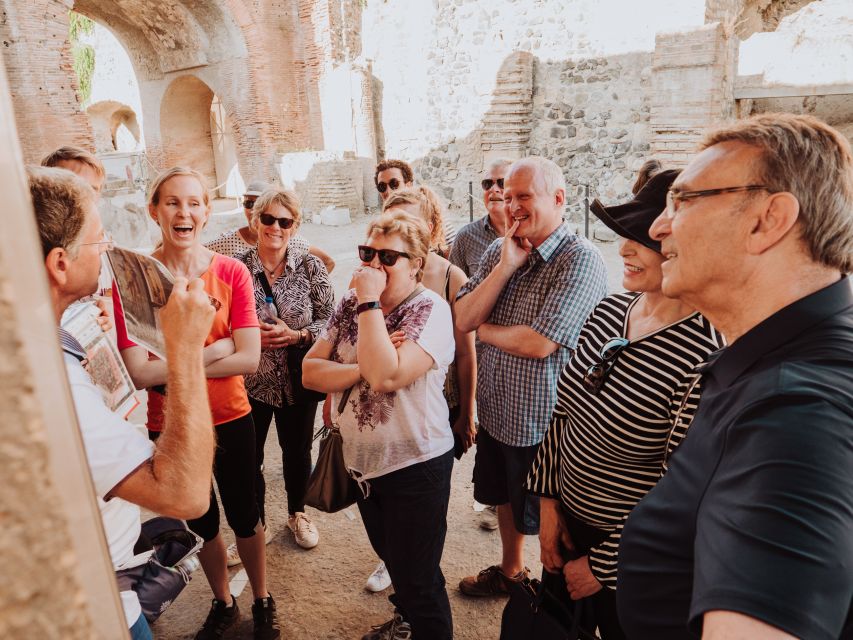
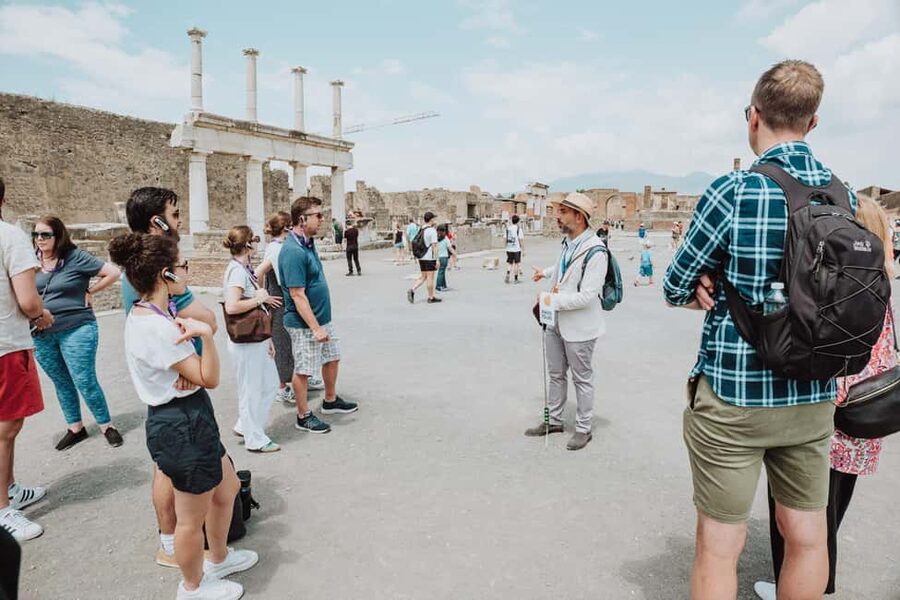
The small-group limit is a real practical benefit. With up to 20 people, you are more likely to hear the explanation and ask a question than in a much larger group. Headsets are provided when the group has more than 10 participants, which helps you keep up when the guide is speaking in a busy or spread-out area.
What two hours in Pompeii can show you
Two hours is enough for a guided overview, not a full exploration of every street. The guide chooses the route and key areas, helping you use your time well. That matters at a site this large: without a plan, you could spend a lot of energy walking without understanding what makes a place significant.
The most affecting part for many people is the human scale of the disaster. Plaster casts of people caught in the eruption make the ancient catastrophe feel immediate, rather than like a distant date in a textbook. The sight can be powerful and upsetting. Take your time with it, and remember that the tour keeps moving through a full itinerary.
You will be on your feet across uneven ancient surfaces, so comfortable shoes are essential. In summer, the open ruins can make the heat feel stronger. Bring water, sunglasses and a hat, and consider a raincoat or poncho if showers are possible. Guides have been described as finding shade when they can, but the route still involves substantial outdoor walking.
The guide’s job is not only to name what you see. Good interpretation helps you picture how people moved through the city and used its buildings. That sort of explanation is the main reason I would choose a guided visit over trying to make sense of Pompeii with a map alone.
More Pompeii visits near Pompei Campania:
- Pompeii: Entry Ticket and Guided Tour with an Archaeologist
★ 4.8 · 19,459 reviews - Pompeii: Small Group Tour with an Archaeologist
★ 4.8 · 12,264 reviews - Pompeii: Skip-the-Line Entrance Ticket with Audio Guide
★ 4.0 · 2,509 reviews
A short break, not a leisurely lunch
After Pompeii, the schedule allows 30 minutes for a break. You can grab something to eat or look at the souvenir shops outside the ruins, but this is a quick pause between long walks, not a sit-down lunch with much breathing room.
That timing is the tour’s clearest drawback. You may have to choose between finding food, using the toilet and resting out of the sun. If a proper meal matters to you, eat before the tour or plan to have one after it ends. Do not count on this break as your main chance to cool down and relax.
The short stop also affects the day’s pace. Two hours of walking through Pompeii is a lot to take in, and you then have a transfer and another guided walk ahead. A snack and water can help, but this is not the best choice if you want a slow day with long pauses.
The train ride changes the setting
After the break, the group travels by Circumvesuviana train from Pompeii toward Ercolano. The ride is described as about 20 minutes, while the itinerary allows 30 minutes for the train segment. Treat it as a short local transfer, not a sightseeing ride, and allow for the possibility that transport conditions may affect the day’s timing.
The shift from Pompeii to Herculaneum is more than a change of address. It sets up the main comparison of the tour: two cities affected by the same eruption, but preserved in different ways. With one guide accompanying you, the differences are easier to notice and understand.
The tour ends at the Archaeological Site of Herculaneum. It does not include transportation back to Pompeii, so arrange your onward journey from Ercolano yourself. If you have a car, a train connection or another plan to return to where you started, factor that into your day before booking.
Herculaneum’s preserved rooms tell another story
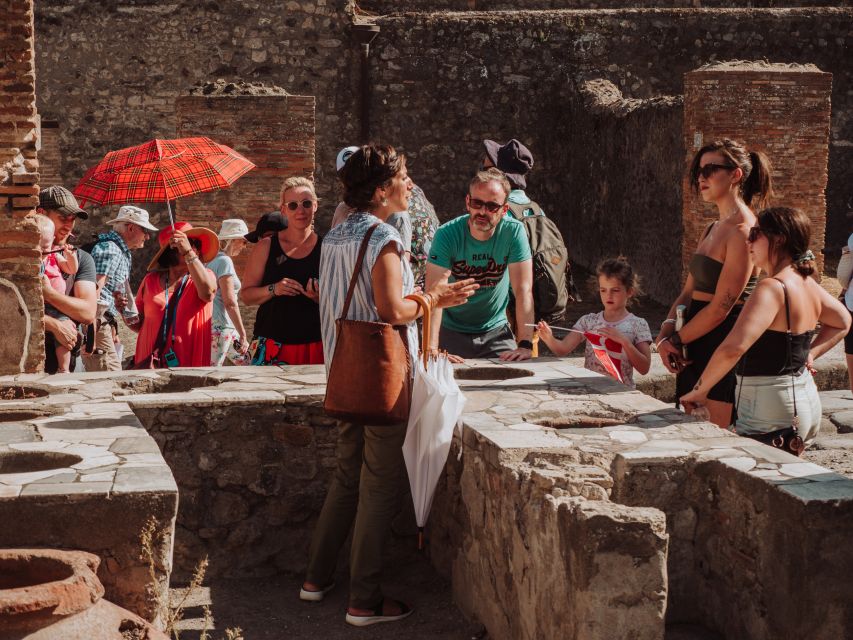
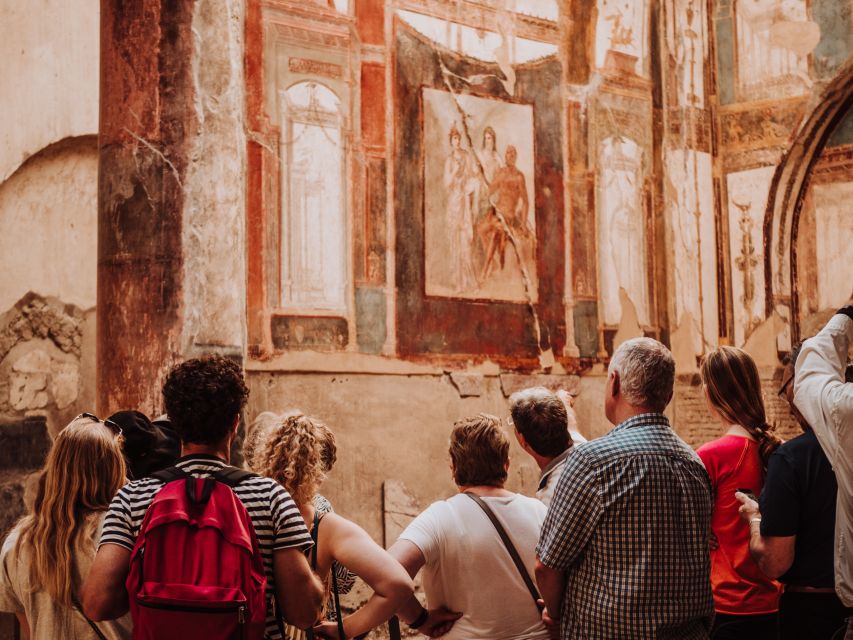
Herculaneum is smaller than Pompeii, but its remains are often striking for their level of preservation. Pompeii was covered by about four metres of ash, while Herculaneum was buried by a much deeper avalanche of mud. That difference helped preserve features such as second floors, carbonized wooden objects, paintings and mosaics.
The result is a more intimate sense of domestic life. Pompeii helps you grasp the scale of a Roman city; Herculaneum can bring you closer to the rooms and objects within it. You may see intact decoration and household details that make it easier to picture the homes of wealthier residents.
That contrast is the strongest reason to do both sites in one day. If you visit only Pompeii, you will see a remarkable city, but you will miss how differently the eruption preserved Herculaneum. If you visit only Herculaneum, you will miss the larger urban picture. Together, they give you a fuller sense of what the disaster destroyed and what it left behind.
The guided visit lasts two hours, the same length as the Pompeii walk. It is a focused look rather than an invitation to explore every part of the site at your own pace. If a particular room or display captures your interest, you may want to return independently when the tour is over, if time and site rules allow.
More Herculaneum visits near Pompei Campania:
- Pompeii and Herculaneum: Guided Tour with an Archaeologist
★ 5.0 · 164 reviews - From Naples: Pompeii and Herculaneum VIP Tour with Lunch
★ 4.4 · 129 reviews - Pompeii & Herculaneum: Skip-the-line & Digital Guide App
★ 4.0 · 35 reviews - Pompeii, Herculaneum, and Vesuvius: Full-Day Tour
★ 3.7 · 21 reviews
How much the guided format adds
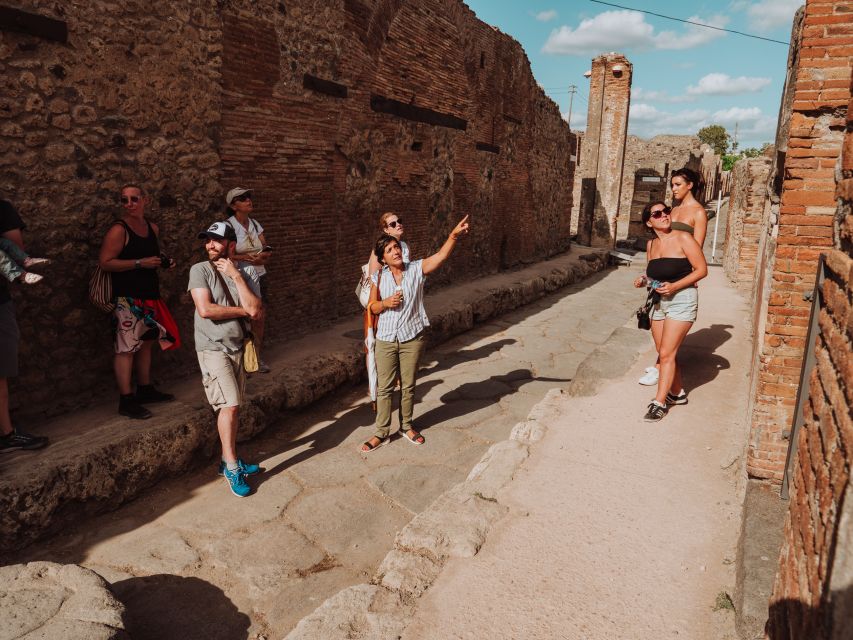
An archaeologist’s explanation is central to the experience, not a small extra. Ancient streets and walls can be impressive on their own, but without context you may struggle to tell what a building was for or why a feature matters. A guide can tie the physical remains to Roman daily life, the eruption and the later work of excavation and preservation.
The strongest tours bring those subjects together through stories and clear explanations. Guides such as Diego, Paolo and Vincenzo have been praised for making complex history engaging, answering questions and using humor without losing the subject’s seriousness. Guides vary, of course, but the format gives you more than a set route and a few dates.
The group size also helps preserve some room for questions. At the same time, 20 people is still a group, not a private tour. You will follow the guide’s pace and route, and the headset provision for groups over 10 helps you hear but does not make the sites quiet or uncrowded.
For an independent visitor with a strong background in Roman history and a detailed plan, a guided tour may feel restrictive. For most first visits, I see the value in having an expert explain what you are looking at, especially when the day covers two large archaeological sites in limited time.
Tickets, meeting point and practical details
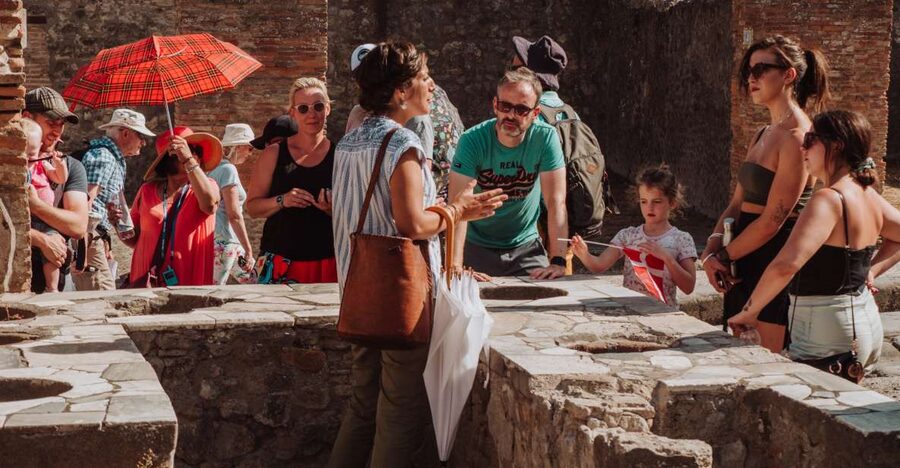
Meet the guide on the left side of Pompeii’s Porta Marina Inferiore entrance, near the Arte bus stop. The meeting point is a few minutes from the Pompei-Villa dei Misteri Circumvesuviana station. Look for an Askos Tours sign, and bring your passport or ID card as required.
There is a ticket detail worth checking before you pay. The tour information says entry tickets are provided for both sites and that the tour skips ticket lines, but it also lists Herculaneum admission at €16 for adults and €2 for EU citizens aged 18 to 25. Confirm at booking whether those amounts are included in your total or need to be paid separately. That is a more useful question to settle in advance than to discover at the gate.
The advertised duration is 5.5 hours, though the listed stops add up to about five hours before allowing for small delays or transitions. The day may run longer if the train is delayed. Wear comfortable clothes and shoes, bring water in warm weather, and carry sun protection in summer. A light rain layer is sensible if the forecast looks uncertain.
This tour is not suitable for wheelchair users or people with mobility impairments. Both sites involve walking through archaeological ruins, and the itinerary is built around two substantial guided visits. If you need an accessible route or a slower pace, check directly with the operator before booking.
Who should choose this Pompeii and Herculaneum tour
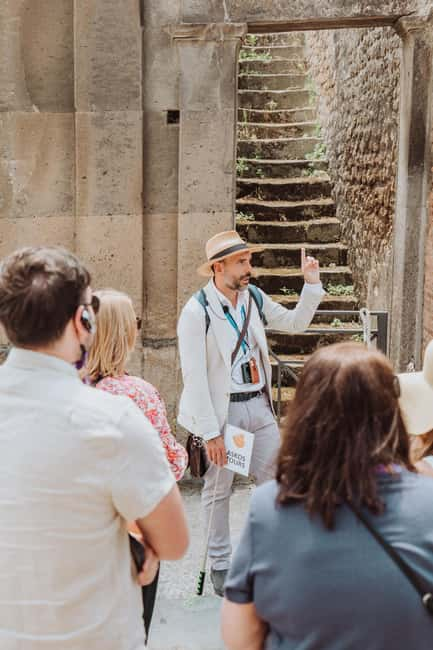
I would recommend this tour if you want to see both sites in one day and prefer a guide to make the ruins legible. It suits history-minded visitors, first-time visitors to the area and people working with a limited schedule. The archaeologist-led format is particularly useful if you want to understand the buildings and artifacts, not just take photographs.
It is less suited to anyone who wants a leisurely lunch, extended time at either site or a flexible route. The 30-minute break is brief, and the group moves on to Herculaneum after Pompeii. You should also be comfortable with a long day of walking and make your own plan for transport after the tour.
The price is best judged against what is included in the experience, not against a site ticket alone. You are paying for two guided walks, an archaeologist’s interpretation and a planned transition between the sites. That can be good value if you would otherwise book separate guides or spend much of your visit trying to work out what you are seeing. Check the ticket charges first, since the supplied details do not make the Herculaneum fee fully clear.
Should you book it?
Book this tour if you want a compact, guided comparison of Pompeii and Herculaneum and are happy to trade free time for expert context. The combination is the point: Pompeii gives you the scale, Herculaneum shows you a different kind of preservation, and the guide helps you connect them.
Skip it if a short lunch break, group pace or substantial walking would make the day unpleasant. If you do book, bring water and sun protection, confirm how site admission is handled, and plan your onward travel from Herculaneum. With those details sorted, this is a strong way to make one day at two extraordinary sites count.
FAQ
How long does the tour last?
The advertised duration is 5.5 hours. The schedule includes two hours of guided touring at each site, a 30-minute break in Pompeii and a train transfer.
Where does the tour start?
Meet on the left side of Pompeii’s Porta Marina Inferiore entrance, near the Arte bus stop. Look for a guide holding an Askos Tours sign.
Where does the tour end?
The tour ends at the Archaeological Site of Herculaneum in Ercolano. Return transportation to Pompeii is not included.
How do we travel from Pompeii to Herculaneum?
The group takes the Circumvesuviana train to Ercolano. The ride is described as about 20 minutes, with 30 minutes allotted in the itinerary.
Are entry tickets included?
The tour information says tickets are provided for both sites, but it also lists Herculaneum admission prices of €16 for adults and €2 for EU citizens aged 18 to 25. Confirm at booking whether any admission fee is payable separately.
What languages are available?
The live guide speaks Italian or English. The English-language tour is specified in the tour description.
What should I bring?
Bring your passport or ID card. Comfortable clothes and shoes are recommended, along with water, sunglasses and a hat in summer. A raincoat or poncho can help in sudden showers.
Is the tour suitable for wheelchair users?
No. The tour is listed as unsuitable for wheelchair users and people with mobility impairments.
More small-group tours near Pompei Campania
- Pompeii: Small Group Guided Tour and Skip-the-Line Ticket
★ 4.5 · 91 reviews - From Positano: Pompeii Ruins Small Group Guided Tour
★ 4.8 · 82 reviews - Pompeii Small Group Tour – Tickets Included
★ 4.7 · 72 reviews - Pompeii Sunset tour for small group
★ 5.0 · 19 reviews
Recently added near Pompei Campania
- Pompeii and Vesuvius Cellars: Tour with Pick-Up in Positano★ 4.7 · 3 reviews
- From Sorrento: Pompeii with an Archaeological Guide & Ticket★ 4.6 · 19 reviews
- From Positano: Pompeii Ruins Small Group Guided Tour★ 4.8 · 82 reviews
- From Naples: Pompeii Wheelchair-accessible with a Guide★ 5.0 · 8 reviews
- Pompeii Positano Amalfi Day Trip from Rome by Car, No Bus!★ 5.0 · 5 reviews
- Pompeii & Virtual Museum Private 2-in-1 Kid’s Tour★ 4.9 · 9 reviews
- Pompeii & Vesuvius★ 4.3 · 12 reviews
- Pompeii Tour_Skip the line ticket + audioguide★ 4.7 · 17 reviews
Herculaneum Tours, compared.
Herculaneum: Skip-the-Line Guided Tour with Archaeologist
Read our review →
Pompeii and Herculaneum Small Group Tour with an Archaeologist
Read our review →
Herculaneum Small Group Tour and Ticket With an Archaeologist
Read our review →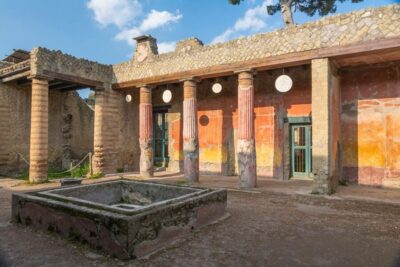
Herculaneum: Skip-the-Line Entry Ticket with Audio Guide
Read our review →
Pompeii & Herculaneum with Archaeologist Guide
Read our review →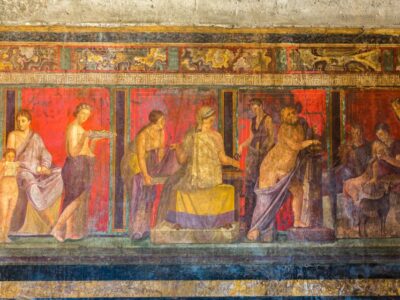
Pompeii, Herculaneum, & Vesuvius Full-Day Tour
Read our review →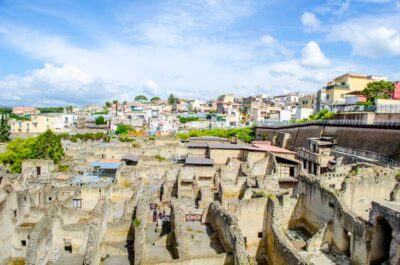
Ercolano: Herculaneum Entry Ticket with Optional Audio Guide
Read our review →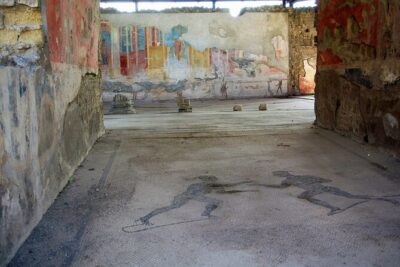
Day Trip of Pompeii, Herculaneum and Vesuvius from Naples
Read our review →Browse the lists this tour appears in