
Reviewed · HERCULANEUM TOURS
Pompeii & Herculaneum Tour with an archeologist
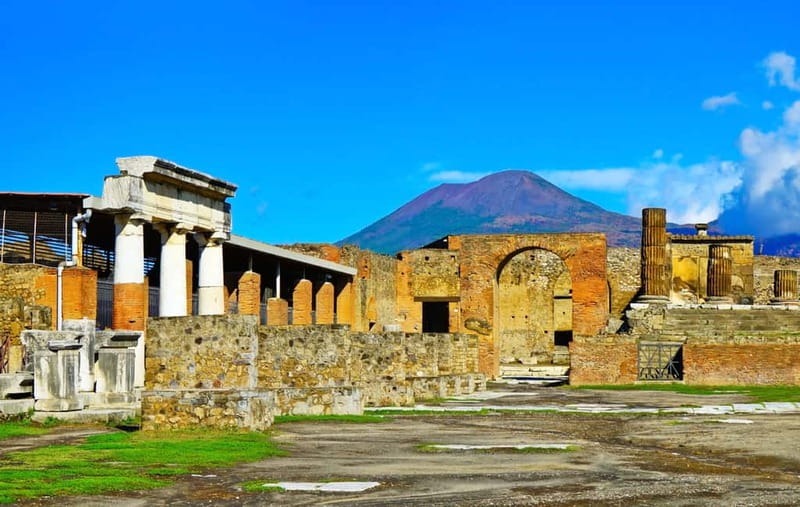
Pompeii and Herculaneum were buried by the same eruption in AD 79, but they tell different stories. This five-hour tour puts both places side by side, beginning at Pompeii’s Forum and ending among Herculaneum’s unusually well-preserved homes.
I like the contrast between Pompeii’s public center and Herculaneum’s elegant houses, and the chance to hear an archaeologist explain what you are seeing. The small group, capped at eight, should make it easier to follow the guide’s explanations as you move through the sites.
The main catch is cost: the advertised group price is $993.72, and entry tickets are extra. There is also conflicting information about pickup and drop-off, so confirm transport arrangements before booking.
- Pompeii’s Forum gives you a clear starting point for understanding the city’s political and commercial life.
- Herculaneum’s upper floors and intact household details show a different side of Roman life than Pompeii’s street network.
- An archaeologist guide explains the similarities and differences between the two sites.
- Groups are limited to eight, but the tour still covers two major archaeological sites in five hours.
- Admission is not included, despite the separate-entrance, skip-the-line access described for the activity.
- The meeting point is Coffee Shop Vittoria, and the tour is listed as ending back there.
Two ancient cities, one eruption
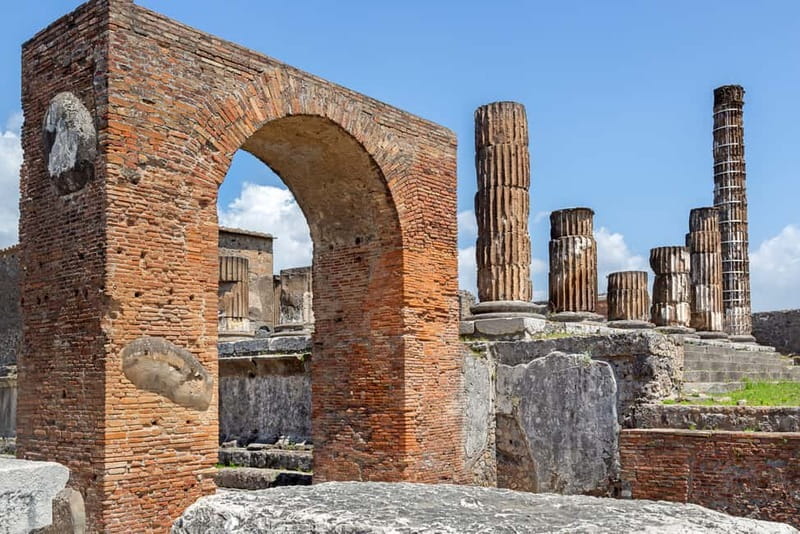
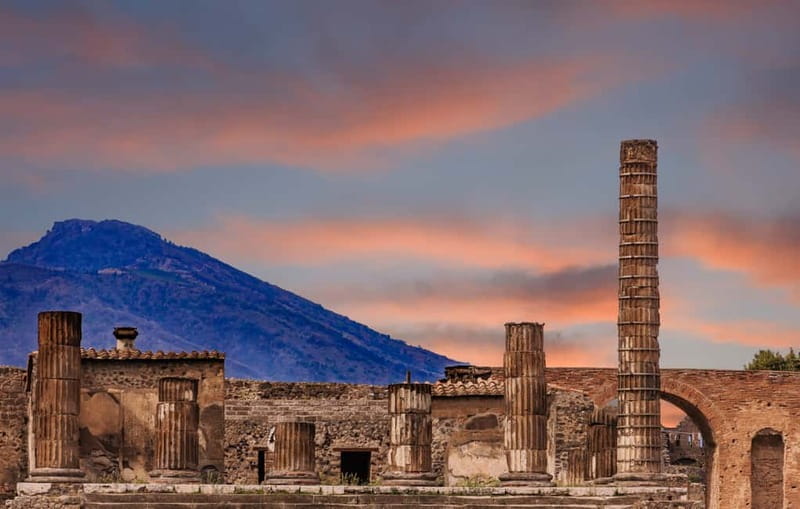
The tour’s most useful idea is simple: Pompeii and Herculaneum were both buried in the eruption of Vesuvius in AD 79, yet the disaster affected them differently. Seeing them together helps you notice that difference rather than treating them as interchangeable ruins.
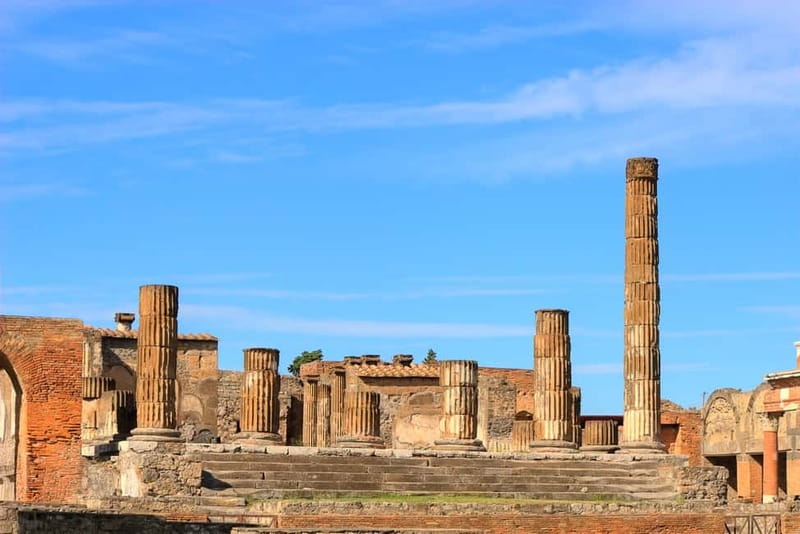
Pompeii gives you a sense of an extensive city, with a dense network of streets and a large Forum at its center. Herculaneum, once a glamorous seaside retreat for wealthy Romans, is known for a different kind of evidence: elegant buildings, surviving upper floors, mosaics, and furniture preserved in striking detail.
An archaeologist can connect those remains to the lives once lived there. That is valuable at sites where a wall, street, or bath can look like just another ancient structure until someone explains its purpose and place in the city.
The five-hour schedule is a compact way to compare both locations, but it is still a brisk visit. If you prefer long stops, slow wandering, or time to explore every corner, this format may feel rushed. Think of it as a guided introduction to two major sites, not an exhaustive visit to either one.
Starting at Pompeii’s Forum
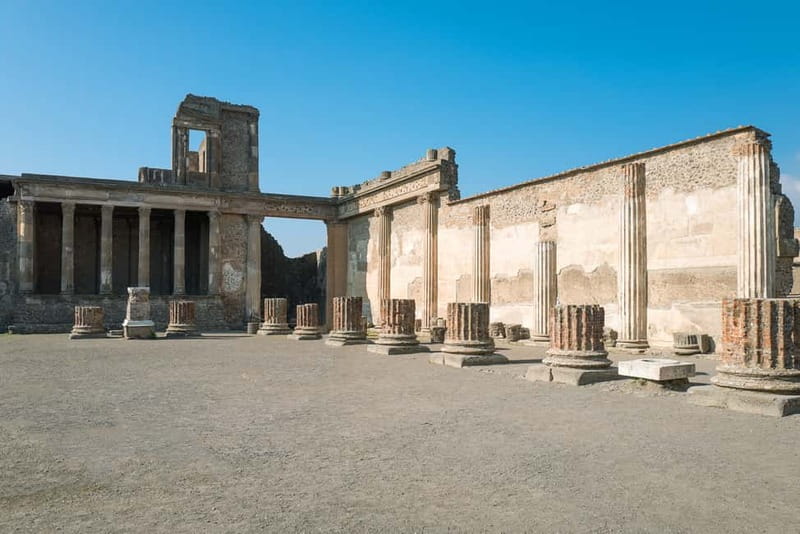
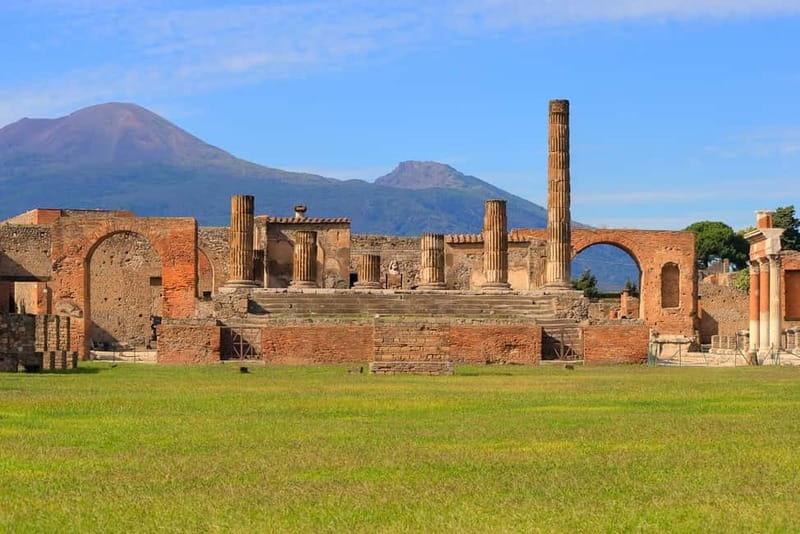
The tour begins in Pompeii at the immense Forum, the center of the city’s political and commercial life. It is a practical first stop because it gives the guide a place to set the scene before you head into the surrounding streets.
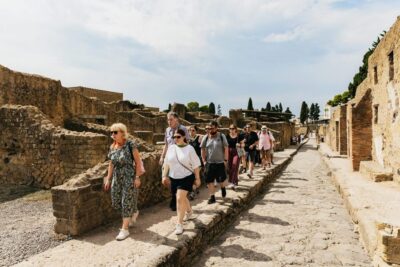
From there, you walk through Pompeii’s dense street network. The streets help you picture the scale and layout of an inhabited city, while the Forum provides a focal point for understanding how public and commercial activity fit together.
The tour description does not specify which other Pompeii buildings or streets you will visit. That makes the guide’s role especially important: the stated focus is the Forum and the network of streets, rather than a guaranteed checklist of individual houses or landmarks.
A guide named Maria has been praised for interesting explanations and strong knowledge of the sites. Another guide was credited with bringing history to life and ending the visit back at the starting point. Those comments point to what matters most here: a good guide can turn a walk among ancient stones into a clearer picture of the people and places they belonged to.
More Pompeii visits near Pompei Campania:
- Pompeii: Entry Ticket and Guided Tour with an Archaeologist
★ 4.8 · 19,459 reviews - Pompeii: Small Group Tour with an Archaeologist
★ 4.8 · 12,264 reviews - Pompeii: Skip-the-Line Entrance Ticket with Audio Guide
★ 4.0 · 2,509 reviews
Seeing Herculaneum’s preserved homes
After Pompeii, the guide takes you to Herculaneum, once a holiday retreat for wealthy Romans overlooking the sea. The town’s reputation as a place of leisure helps explain why its houses are such a central part of the visit.
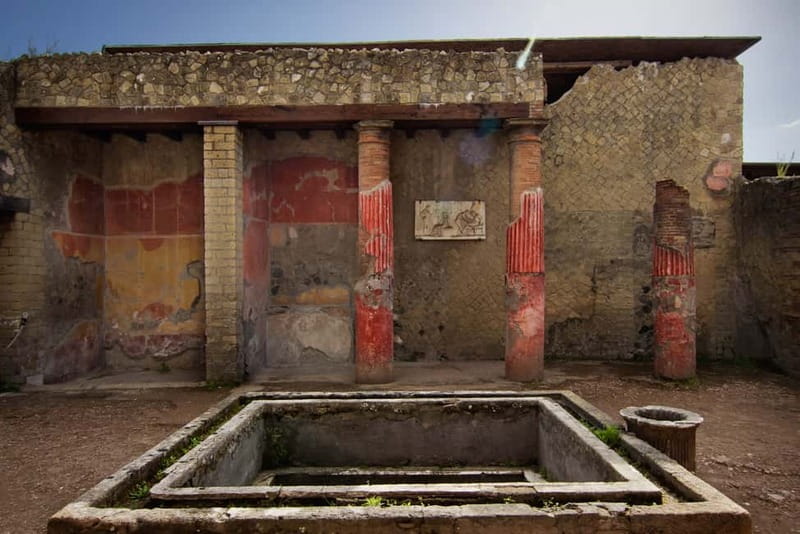
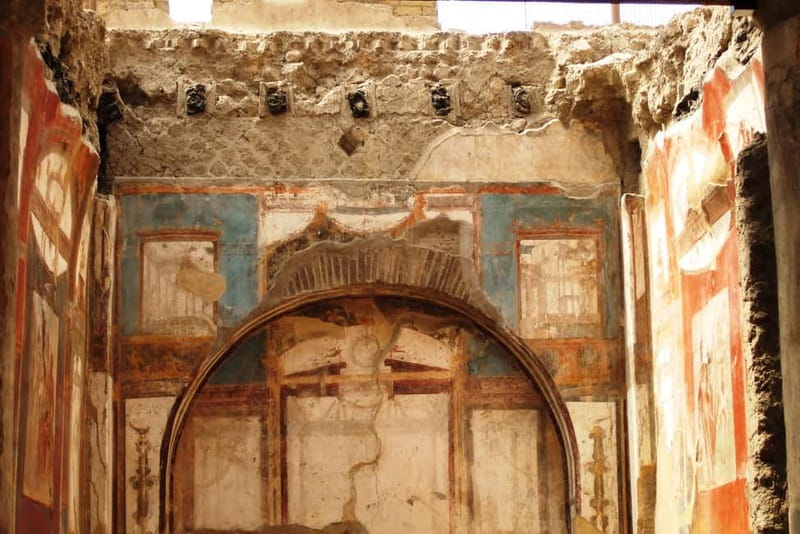
Herculaneum is better preserved than Pompeii, and the surviving upper floors of buildings make that difference visible. At the Casa del Salone Nero and Casa Sannitica, you can see parts of elegant homes that remain standing, rather than imagining an upper storey from foundations alone.
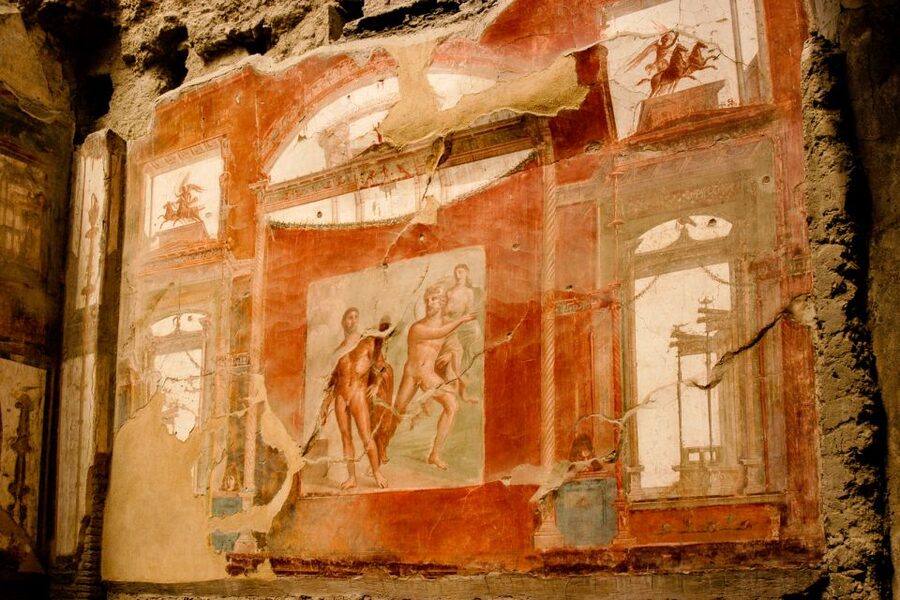
The houses also preserve details that bring domestic life closer. The tour points to beautiful mosaics and furniture that was charred but remains extraordinarily intact. Those objects are a reminder that these were homes, not simply impressive structures built for display.
The contrast with Pompeii is the heart of the Herculaneum visit. At Pompeii, the Forum and street network help explain public life and the city’s layout. At Herculaneum, surviving household features and upper levels give you a closer look at private life and the town’s more refined character.
The thermal baths and Roman leisure
Herculaneum’s thermal baths offer another window into daily life. The guide explains the recreational bathing culture, while the preserved decorations show the care given to these public spaces.
The baths are worth your attention not only for their decoration, but because they help broaden the picture beyond private homes. Together, the houses and baths show both domestic and shared spaces in a town associated with wealthy Roman residents.
The remarkable point is how much detail remains after two millennia. You are looking at mosaics, furnishings, and decorative features that survived the burial of the city. The guide’s explanations can help you see these objects not as isolated curiosities, but as evidence of how people lived and spent their time.
What an archaeologist guide adds
The tour is led in English by a specialist archaeologist. That expertise is useful at both sites, where context makes a real difference: the same eruption did not leave the same kind of remains, and the guide helps explain why the two places look so different today.
The small-group limit of eight is another practical benefit. It is easier to hear explanations and keep track of the guide in a group this size than in a large crowd. It also suits people who want a structured visit without being part of a big tour party.
The strongest praise for this experience centers on the quality of the explanations. Maria is specifically named as a guide who made the places interesting and explained them well. Another guide was described as guiding the group through the sites with skill and making history feel immediate. A specific guide is not guaranteed by the tour details, but the archaeologist-led format is a key part of the experience.
More Herculaneum visits near Pompei Campania:
- Pompeii: Small-Group Tour of Pompeii and Herculaneum
★ 4.8 · 867 reviews - Pompeii and Herculaneum: Guided Tour with an Archaeologist
★ 5.0 · 164 reviews - From Naples: Pompeii and Herculaneum VIP Tour with Lunch
★ 4.4 · 129 reviews - Pompeii & Herculaneum: Skip-the-line & Digital Guide App
★ 4.0 · 35 reviews
Five hours across two sites
Five hours is enough for a guided comparison of Pompeii and Herculaneum, but it leaves limited room for lingering. You should be ready to keep moving and focus on the stops the guide selects.
The tour starts at Coffee Shop Vittoria and is listed as ending back at the meeting point. The activity information also says pickup and drop-off are included, while a separate section says they are not. Because those details conflict, do not assume that transport to or between the sites is covered. Confirm what is included before you pay.
The experience is described as wheelchair accessible. It also offers a separate entrance for skip-the-line access, but this should not be confused with an included ticket. Admission tickets are explicitly excluded from the price, so you need to account for them separately.
Starting times depend on availability. The first Sunday of each month has free entry, but tickets cannot be reserved in advance on that day, and entry is not guaranteed. That uncertainty makes a free-entry visit a gamble, especially when your time is limited.
Is the $993.72 group price good value?
The listed price is $993.72 for a group of up to eight. At the maximum group size, that works out to about $124.22 per person before admission tickets. With fewer people, the cost per person rises, so this is best considered a private-feeling small-group tour rather than a low-cost way to visit.
The price buys a specialist archaeologist guide for both sites, a small group, and a focused five-hour comparison. If expert explanations are a priority, that can be worth paying for. The guide’s role is particularly valuable here because the main point of visiting both places is understanding how their remains differ.
However, the separate ticket cost changes the total. You should include admission in your budget rather than judging the value from the tour price alone. The conflicting pickup information also needs sorting out before booking, since transport can affect both cost and convenience.
This tour is a better fit for someone who values a guide and wants to compare the sites in one outing than for someone seeking a cheap, unstructured visit. If your priority is more time inside each location, consider whether a five-hour schedule for both sites is right for you.
Who should book this tour?
Book it if you want an archaeologist to connect Pompeii’s public spaces with Herculaneum’s preserved homes, and you are comfortable with a brisk pace. It is particularly suited to people who want context at both sites without arranging separate guided visits.
It is less suitable if you want to explore at your own pace, have a tight budget, or need certainty about included transport before booking. The admission tickets are extra, and the pickup details should be clarified. Those are not small points when the group price is nearly $1,000.
I would choose this tour for the comparison and guide, not for the price alone. The Forum, Herculaneum’s intact upper floors, and its mosaics and furniture make a strong pair of visits, but the value depends on how much you care about expert interpretation.
FAQ
How long is the tour?
The tour lasts five hours. Starting times vary, so check availability for the date you want.
Where does the tour start and end?
The meeting point is Coffee Shop Vittoria. The activity is listed as ending back at the meeting point.
Are entrance tickets included?
No. Entry tickets are not included in the tour price.
What language is the tour in?
The live tour guide speaks English.
How many people are in the group?
The small group is limited to eight participants.
Is entry guaranteed on the first Sunday of the month?
No. Entry is free on the first Sunday of each month, but tickets cannot be reserved in advance and entry is not guaranteed.
Recently added near Pompei Campania
- Pompeii and Vesuvius Cellars: Tour with Pick-Up in Positano★ 4.7 · 3 reviews
- From Sorrento: Pompeii with an Archaeological Guide & Ticket★ 4.6 · 19 reviews
- From Positano: Pompeii Ruins Small Group Guided Tour★ 4.8 · 82 reviews
- From Naples: Pompeii Wheelchair-accessible with a Guide★ 5.0 · 8 reviews
- Pompeii Positano Amalfi Day Trip from Rome by Car, No Bus!★ 5.0 · 5 reviews
- Pompeii & Virtual Museum Private 2-in-1 Kid’s Tour★ 4.9 · 9 reviews
- Pompeii & Vesuvius★ 4.3 · 12 reviews
- Pompeii Tour_Skip the line ticket + audioguide★ 4.7 · 17 reviews
Herculaneum Tours, compared.
Herculaneum: Skip-the-Line Guided Tour with Archaeologist
Read our review →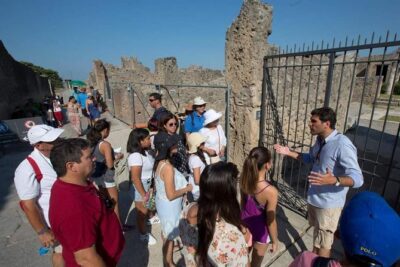
Pompeii and Herculaneum Small Group Tour with an Archaeologist
Read our review →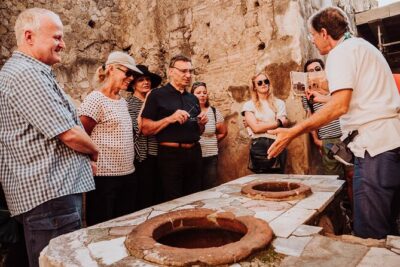
Herculaneum Small Group Tour and Ticket With an Archaeologist
Read our review →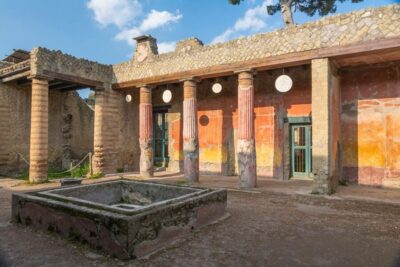
Herculaneum: Skip-the-Line Entry Ticket with Audio Guide
Read our review →
Pompeii & Herculaneum with Archaeologist Guide
Read our review →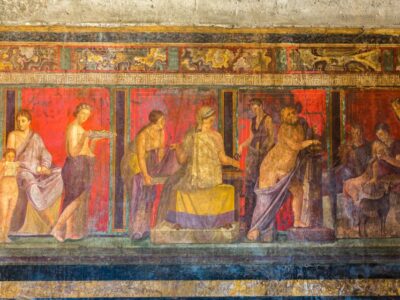
Pompeii, Herculaneum, & Vesuvius Full-Day Tour
Read our review →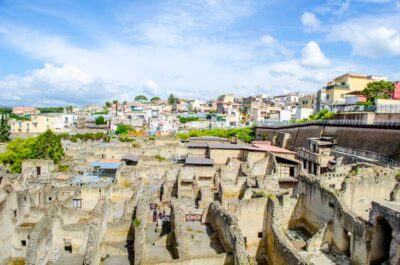
Ercolano: Herculaneum Entry Ticket with Optional Audio Guide
Read our review →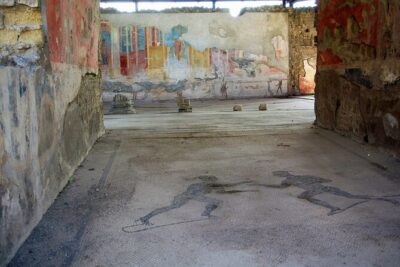
Day Trip of Pompeii, Herculaneum and Vesuvius from Naples
Read our review →Browse the lists this tour appears in